


Marco Rubio arrived in the eastern Indian city of Kolkata on Saturday for a four-day visit that will take him to Delhi, Jaipur and Agra and puts energy at the center of a tense diplomatic moment. Rubio is due to meet Prime Minister Narendra Modi during the trip.
Rubio framed the visit bluntly on arrival: "We want to sell them [India] as much energy as they'll buy," he said, adding, "And obviously, you've seen, I think, we're at historic levels of US production and US export." The comments come as energy shipments through the Strait of Hormuz have virtually ground to a halt, a development that has sharpened New Delhi's immediate needs: India imports more than 80% of its energy requirements and is home to more than 1.4 billion people.
The visit lands against a backdrop of significant trade friction between the two democracies. The united states ran a goods trade deficit with India of $58.2bn in 2025 — an increase of 27.1% from 2024 to 2025 — a number that will complicate talks that mix commercial opportunity with geopolitical urgency.
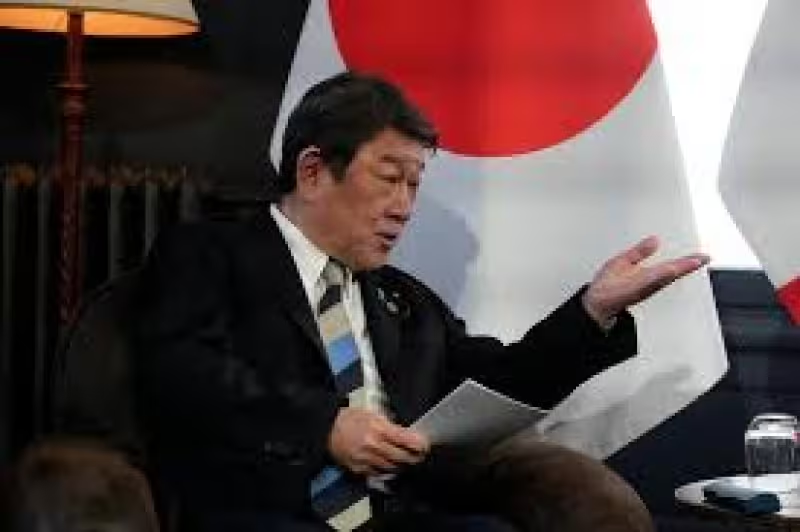
Friends and rivals in the region are already moving. Japan's foreign ministry said on Friday the Quad foreign ministers will meet in New Delhi on May 26, a gathering of the United States, Japan, Australia and India. Japan's foreign minister, Toshimitsu Motegi, is due to begin a three-day visit to India on Monday to attend. The US State Department said Rubio flew to India from Saturday after visiting Sweden for the NATO foreign ministers' meeting.

Indian analyst Vineet Prakash said energy security will dominate the visit. "Energy security is going to be the key theme of this visit because the Iran situation is not going to be resolved anytime soon," he said, and added the limits of Washington's leverage: "The US has already given a waiver to India on buying Russian oil, but Delhi is likely to push for more concessions."
Context matters: the Strait of Hormuz became a flashpoint after Israel and the united states struck Iranian targets in February, and Iran has used the closure of the strait as pressure in fragile negotiations with Washington. That shift has left heavy importers like India, which depends on foreign supplies for basic fuels from cooking gas to refined petroleum products, searching for immediate sources of replacement capacity.
Rubio's public sales pitch — to turn America's export surge into reliable supplies for India — collides with political reality in New Delhi. The visit comes amid long-running trade tensions between Delhi and Washington, and Indian negotiators are likely to weigh energy offers against broader economic demands. The size of the US goods deficit and the recent jump in that figure show why trade will not be separable from energy in any substantive deal.
There is a tactical contradiction at the heart of Rubio's mission. He speaks from a country touting record production and export capacity; India needs large, secure flows now because shipments through a key waterway have nearly stopped. But New Delhi has in the past balanced strategic relationships with commercial needs and resisted quick pivots when concessions would carry political cost. That gap — between available US supply and the political terms India will accept — is the friction that could frustrate any rapid breakthrough.
The most consequential question after Rubio's arrival is whether he can translate Washington's export boom into concrete, near-term deliveries and concessions India will accept before the Quad meeting on May 26. If he cannot, the visit will sharpen a choice for New Delhi between short-term energy relief and longer-term diplomatic alignment with the United States and its partners in the region.