



The Nigerian Civil Aviation Authority directed its directorates to suspend services to 11 domestic airlines in an internal memo dated 22 May 2026, ordering departments to withhold regulatory and administrative support until outstanding debts are cleared or repayment plans are agreed.
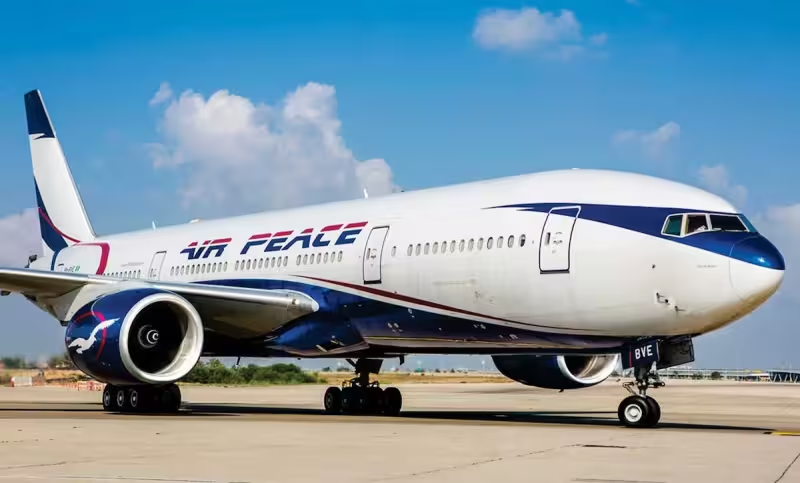
The memo, signed by Olufemi Odukoya and circulated across the authority’s regional offices and copied to the Director-General of Civil Aviation and other senior officials, placed Air Peace Limited, Ibom Air Limited, Arik Air Limited, United Nigeria Airlines, Umza Air, NG Eagle, Max Air Limited, Caverton Helicopters, Overland Airways, Rano Air and ValueJet on an updated No-Pay-No-Service list.
The directive was blunt about the condition for resumption: "The DGCA has directed that no directorate should render any service to the above airline without financial clearance from the director of finance and account." The memo instructed all NCAA departments to withhold services to the listed operators pending financial clearance from the Directorate of Finance and Accounts.
The dispute centers on a five per cent Ticket Sales Charge and Cargo Sales Charge. The memo said those levies are funds collected by airlines on behalf of the NCAA to support safety oversight, personnel training and economic regulation in the aviation sector, and that services will remain suspended until the Directorate of Finance and Accounts confirms settlement or an agreed repayment plan.



Local news outlets reported the authority’s move as a no-pay-no-service arrangement that may leave the affected operators unable to access some regulatory services until their financial obligations are settled. The directive was described in one report as a government order implemented through the NCAA.
Those obligations come at a time when domestic carriers are under pressure from rising operating costs, including jet fuel and foreign exchange challenges. The economic squeeze has been widely reported and followed stories about fuel pricing and refinery developments that have kept carriers on edge, including coverage of a recent jet fuel price cut and earlier warnings from airlines when refinery subsidies were discussed.
The gap between the regulator’s need for stable funding of oversight functions and the airlines’ fragile finances is the story’s friction. The NCAA’s memo asserts the charges are statutory and necessary for safety and regulation, yet a separate report noted that carriers are struggling with high operating expenses that complicate immediate payment.
For now the next step is procedural: directorates across the authority will not render services to the listed carriers until the Directorate of Finance and Accounts issues financial clearance. The memo gives the NCAA leverage to press for payment or repayment agreements; it was circulated to regional offices and senior officials to ensure the suspension is enforced uniformly.
Signed by Odukoya on 22 May 2026, the memo turns a long-running funding friction into an immediate operational condition for the affected airlines: their access to regulatory and administrative services now hinges on settling the five per cent charges or negotiating a timetable with the regulator, a development that will determine whether services are restored.