



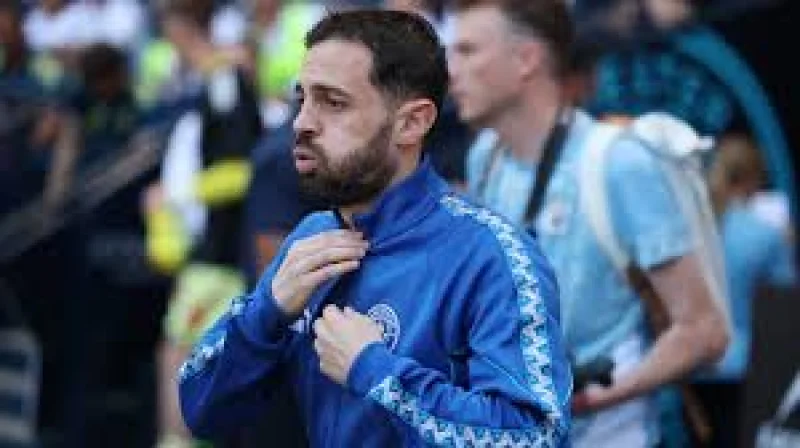
Bernardo Silva told reporters after Portugal’s friendly with Chile that he has not decided his next club, and that Barcelona is merely one option among several as he weighs offers after nine years at Manchester City.
The name Roberto Martínez has surfaced around Europe during recent transfer chatter as national coaches and tactical fits come under scrutiny, but Silva’s own public remarks are the immediate reason his next destination is in the headlines today.
Silva, 31, said he wants to be at a club that genuinely wants him and where he will feel useful, and he repeated that he has not taken any decision yet. He left Manchester City after nine years and a haul of titles, and season figures cited in reports note he played all 38 Premier League matches this year and finished the campaign with 53 appearances, three goals and five assists.
Agents and club contacts are already active: Jorge Mendes is working on opportunities in La Liga while multiple clubs have been linked to Silva’s next move. Barcelona, Atlético de Madrid and Juventus are named among the suitors, and one report suggested Silva had been offered to Real Madrid earlier in the cycle before Barcelona and Atlético pressed their interest.



That combination of agent movement and club pursuit is what makes Barcelona the headline favorite in some corners, but Silva himself pushed back on any notion that a choice has been made. He said he will not rush and that the idea Barcelona is a done deal is premature—he called it an option, not a conclusion.
The financial picture is part of the calculus: one English-language report said Silva would accept a substantial salary reduction to fit Barcelona’s structure, a factor that would make a move to Camp Nou feasible even against competing bids. Yet Silva’s simple yardstick—wanting to feel wanted and useful—remains the public metric he has set for any transfer decision.
There is also a calendar friction. Fabrizio Romano has forecast that Silva will decide after the World Cup, a timeline Silva’s comments reinforced by refusing to be pushed into a quick choice. That creates a narrow window for clubs to change offers or alter their appeals to the player and his representatives during the tournament.
The immediate consequence is a pause rather than a pivot: clubs must either deepen their proposals now or wait for Silva’s post-World Cup decision. For Barcelona and the other suitors, Silva’s words mean negotiation will continue but cannot be closed in the short term; for Silva, they buy time to weigh tactical fit, location and the role each club can promise.
Silva’s public refusal to commit sharpens the remaining question: when the World Cup ends, will a club that can guarantee playing time and a clear tactical role be enough to tip him? Fabrizio Romano’s timeline points to an answer after the tournament, but which of the candidates—Barcelona, Atlético, Juventus or another suitor—will meet Silva’s stated test remains the open, consequential fact readers should watch.