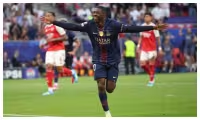



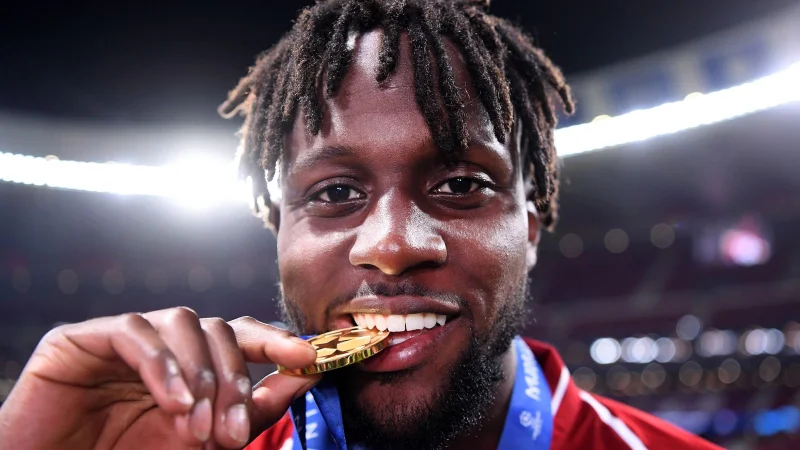
Divock Origi announced his retirement from professional football on June 8, 2026, at the age of 31, bringing to an end a career remembered for late, decisive interventions more than steady starting roles.
Interest in divock origi surged immediately because, in the statement that accompanied his decision, he told Sky Sports that "Three goals come to mind," naming "Barcelona, in the Champions League final, and the Everton derby in the 96th minute." He added: "Each one is iconic in its own way. The final probably represents the height of it all; you saw the fruit of everything," and closed by saying, "But if I had to choose one, I'd say the Barcelona goal. The emotion and the feeling of those three will stay with me forever."
Those three moments help explain why his retirement matters now. Brendan Rodgers signed Origi in 2014, and between 2014 and 2022 he scored 41 goals in 175 games for Liverpool, collecting a Champions League, a Premier League title, an FA Cup, a UEFA Super Cup and a FIFA Club World Cup along the way. After leaving Liverpool in 2022 he continued his career with spells at Nottingham Forest and AC Milan among other clubs before concluding his playing days.


Jurgen Klopp framed the emotional weight of those contributions when he said Origi "is, and will be for me, forever a Liverpool legend." That high praise sits uncomfortably beside the fact that Origi often did not enjoy regular minutes under Klopp; many of the goals that etched his name into supporters' memories came from appearances off the bench or in moments when he was not a guaranteed starter.
Nowhere is the contradiction between reputation and usage clearer than in Merseyside derbies and continental finals. Origi scored six goals in Everton games — one arriving in the 96th minute — and he provided finishes that altered the course of single matches and, in the case of the Champions League final, a season. Those strikes explain why a player with an uneven run of minutes could still be held as a cult figure: his interventions were disproportionately consequential.
Origi's choice to single out the Barcelona goal when asked to pick one moment crystallizes how supporters will remember him. It is not a record of regular dominance but a ledger of timing: goals that arrived when results hung in the balance and that still carry a vivid emotional imprint for fans and teammates alike.
He did not outline what comes next. There has been no announcement of a coaching move, a media role, or any plan beyond retirement itself; whether Origi remains in the game in another capacity or steps entirely away is currently unknown. That unanswered decision will shape how the story of his career is told in future—either as a catalog of unforgettable finishes or as the closing chapter of a life that might yet take a new path off the pitch.