





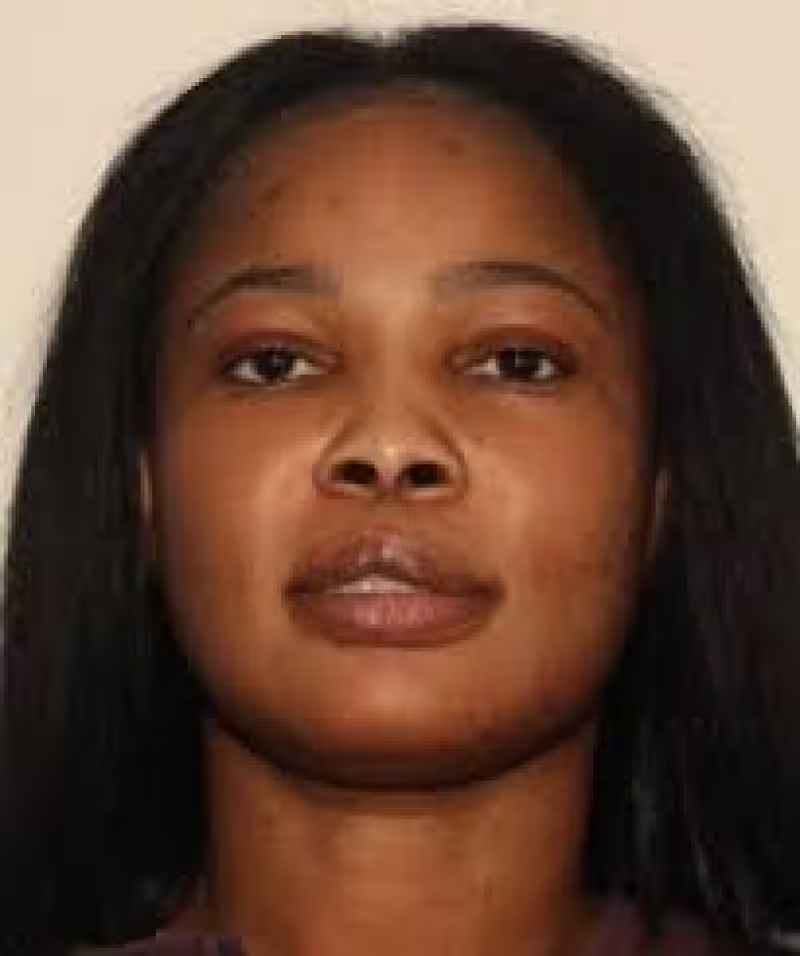
Emuobosan Emanuella Hall, 45, a Nigerian national and United States permanent resident, failed to report to a Bureau of Prisons facility to begin a 96-month sentence and a federal arrest warrant was issued for her on April 14, 2026.
The warrant was signed by U.S. Magistrate Judge Donna Phillips Currault after prosecutors said Hall did not show up as ordered following her January 2026 sentence. Shane M. Jones said, "Hall was initially charged in April 2024 by a federal grand jury in New Orleans with conspiracy to commit mail and wire fraud and conspiracy to commit money laundering." Jones added: "She was arrested in Atlanta, Georgia, granted bond, and later pleaded guilty."
The case is tied to a romance scam that prosecutors say bilked mostly older women out of large sums. Hall admitted responsibility for $851,207 in losses; her co-defendant, Kenneth G. Akpieyi, was held responsible for more than $3.5 million and was sentenced to 25 years after a July 2025 conviction. In January 2026, U.S. District Judge Jane Triche Milazzo sentenced Hall to 96 months but permitted her to remain on bond with instructions to report to a designated Bureau of Prisons facility by March 25, 2026, Jones said.
Authorities say the last known digital trace of Hall came from a court-ordered monitoring device. "GPS data from her monitoring device placed her last known location at Hartsfield-Jackson Atlanta International Airport on March 24, 2026, where the device stopped transmitting," Jones said. She did not report to prison the next day. A federal criminal complaint filed April 14 alleges she gave her probation officer flight details to Minnesota, but airline records show she did not board the flight, and phone records instead suggest she traveled to Dulles International Airport outside Washington, D.C., Jones said.
The scheme prosecutors described used social media to establish contact and move victims to encrypted messaging. Prosecutors say Hall and Akpieyi posed as generals, philanthropists or entrepreneurs living abroad, contacted victims through Facebook and Instagram, and then shifted conversations to WhatsApp, persuading targets to send money for charitable work or medical emergencies. Hall and Akpieyi operated Le Beau Monde LLC to facilitate the transfers; Hall deposited victim funds into company accounts and transferred them to other institutions, including foreign banks, according to court materials.
The friction in the case is direct: Judge Milazzo allowed Hall to remain free on bond until a reporting date, yet she did not surrender and now faces further federal exposure. If convicted of failing to surrender, Hall could face an additional 10 years in prison and a fine up to $250,000. David I. Courcelle said, "Our office will vigorously enforce the law, particularly when a defendant fails to report to prison to serve her sentence" and added, "Her failure to report to prison reflects an utter lack of respect for the law."
Investigators have confirmed Hall is at large and has evaded custody. Federal authorities issued the arrest warrant on April 14; the same filing asks that she be apprehended and returned to court. Kenneth G. Akpieyi, by contrast, remains in federal custody serving the sentence imposed after a four-day jury trial in July 2025, underscoring the government’s intent to see the broader conspiracy punished.
The most urgent question now is where Hall went after the monitoring device stopped transmitting and whether phone and travel records can be used to locate her before she departs the country or otherwise frustrates federal efforts. For prosecutors, the case is no longer only about recovering proceeds from a fraud that cost victims more than $4.3 million between the two defendants; it is about securing compliance with a court order and deterring defendants from ignoring sentences imposed by the judiciary.
Hall remains at large as federal agents and prosecutors pursue leads from the last known electronic traces and the travel information she provided to her probation officer. The arrest warrant signed by Magistrate Judge Currault gives law enforcement authority to take Hall into custody should she be located, and the additional criminal exposure she faces makes her capture both a legal and logistical priority for the office handling the case.