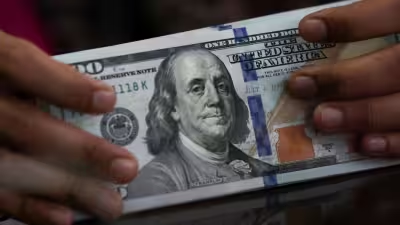





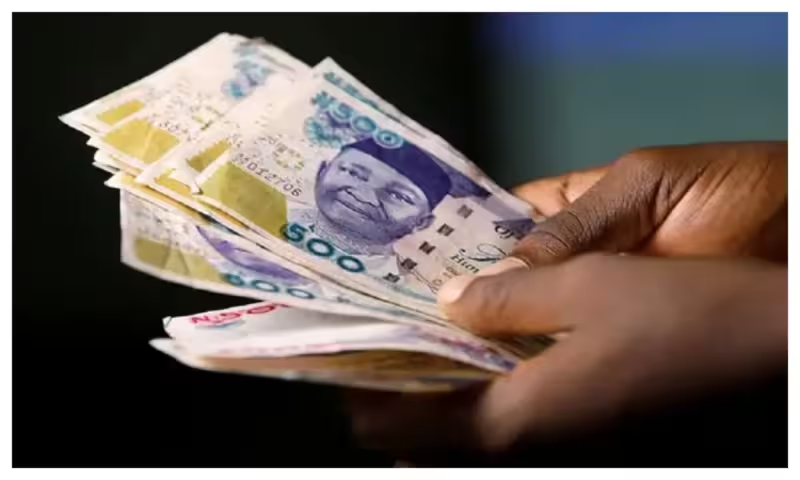
The naira continued to lose ground against the dollar on Tuesday, April 21, 2026, weakening to N1,350.74 at the official foreign exchange market, the Central Bank of Nigeria's data showed.
The move represented a N1.07 decline from the N1,349.67 rate recorded on Monday, April 20, 2026, according to the central bank's figures. At the parallel market on Tuesday, the naira traded at N1,425 per dollar, a small firming from the N1,430 per dollar level reported the previous day.
Nigeria's external reserves, a closely watched buffer for foreign payments, fell to $48.54 billion on Monday, April 20, 2026, down from $48.61 billion on 17th April 2026, showing the reserves have sustained their decline over the past week.
The sequence of numbers underlines the scale of the shifts: the official market recorded the N1,350.74 rate on Tuesday after a N1.07 one-day fall, while the black market moved to N1,425 per dollar from N1,430 per dollar the day before. The central bank provided the official exchange rates and the reserve figures in its daily releases.



Market traders and businesses felt the effect of the currency moves in the opening days of the week. The naira had already slumped across foreign exchange markets on Monday, April 20, 2026, to begin the week, a slide that carried into Tuesday despite the marginal improvement at the parallel window.
Compounding the financial headlines, Wale Edun was sacked by President Bola Ahmed on Tuesday, April 21, 2026. The personnel change arrived on the same day the central bank's data captured the further depreciation and the continued drawdown in external reserves.
The day's mix of numbers produces an unsettled picture. Official rates slipped while the parallel market showed a modest rebound — an unusual divergence that highlights the fragmented nature of foreign-exchange pricing in recent sessions. At the same time, external reserves edging lower removes some of the cushion available to smooth volatility.
For businesses that manage import bills and for households watching prices on essentials, the near-term consequence is a tighter environment for foreign exchange availability and pricing. The central bank's daily figures make clear that the country entered the week with the naira under pressure and reserves on a declining path.
The single most consequential question now is who will step into the role vacated by Wale Edun and whether policy decisions under new leadership will halt the slide in reserves and stabilize the naira to dollar trading. That answer will shape whether the modest parallel-market easing seen on Tuesday becomes a trend or a temporary reprieve amid deeper pressures.