




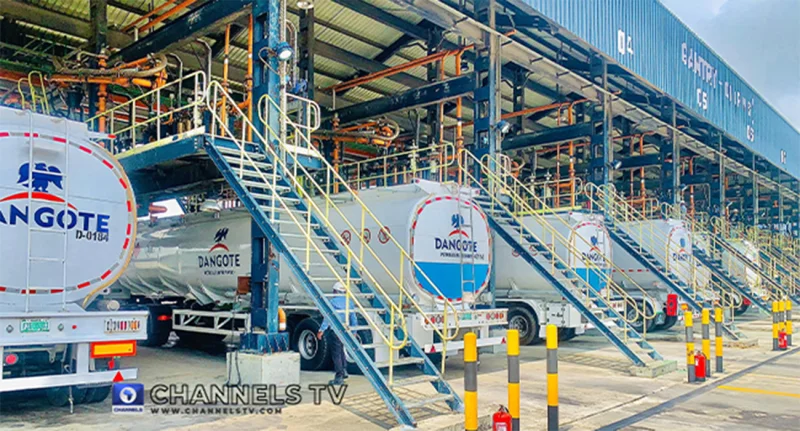
Dangote Petroleum Refinery & Petrochemicals has reduced its ex-depot price for petrol to ₦1,250 per litre from ₦1,275 and cut diesel to ₦1,700 per litre from ₦1,800, the company announced on the day of the price review.
The announcement, which has driven searches for dangote refinery petrol price cut, came as the refinery said the move is part of its effort to deepen domestic refining, improve supply efficiency and provide cost relief to consumers and businesses that rely on fuel for transport, power and industry.
The change matters because the company has been ramping up local deliveries since it began operations and it operates at a stated capacity of 650,000 barrels-per-day — a scale that makes its ex-depot pricing a meaningful factor for wholesale fuel flows across the country.
For immediate proof of the company’s intent: the petrol price fell by ₦25 a litre at the ex-depot level and diesel by ₦100 a litre. Those cuts apply to the wholesale price point that distributors and marketers use to buy product from terminals, which is why the refinery framed the move as a way to steady supply and ease costs along the fuel chain.



Yet the new wholesale numbers sit well below the current average retail price most consumers pay at the pump. Average petrol prices are running around ₦1,532 per litre, meaning the ex-depot figure of ₦1,250 still leaves a gap of several hundred naira before retail prices would reach that level. The refinery did not announce a timetable for retail pass-through, and it remains unclear whether and when marketers will change pump prices to reflect the cheaper wholesale supply.
That gap is the practical friction in the announcement. The refinery is explicitly trying to bend the supply curve by increasing domestic product deliveries and lowering its wholesale price. But without a commitment from marketers, transporters or retailers, the stated cost relief can be delayed or diluted by distribution margins, logistics costs and existing stock bought at earlier prices.
For sectors that use diesel for power generation and industry, the ₦100 per litre diesel cut is immediately relevant at the point of wholesale purchase and may lower operating fuel bills for companies that buy in bulk or for marketers that can move product quickly. For ordinary motorists, the effect will depend on how fast retailers adjust pump prices and how much of the ex-depot reduction they choose to pass along.
The single issue left unresolved by the refinery’s move is timing: the company supplied the exact new ex-depot figures but not a schedule for retail pass-through. The most consequential question now is whether marketers will reflect the refinery’s lower ex-depot prices in pump rates — and if so, by how much and how quickly. That will determine whether motorists and businesses feel the promised cost relief or continue paying near the current average of about ₦1,532 per litre.