




Shortly after 11h30 on Wednesday, Labour Minister Maria do Rosário Palma Ramalho told journalists that the general strike had "absolutamente residual" participation in the private sector, presenting the government's first formal assessment of a stoppage the ministry calls the second in six months.
The comment matters in Portugal today because the protest targets a labour-law reform aimed chiefly at private employers; Ramalho framed Wednesday's action as broadly limited to public services and therefore of different political weight than if private industry had joined in force.
Ramalho said an "esmagadora maioria" of Portuguese workers were at work on Wednesday and that the private sector was functioning "absolutamente normal": all factories in the country's main production areas were operating, agricultural activity was "absolutamente normal," bank branches were open and central services were running. She added there were no signs of disruption in private hospitals, construction or in attendance and logistics across major retail and commerce, and that there had been no disturbance reported in hotels or travel agencies. "Os dados falam por si," she said, and reiterated that "O governo reitera que a greve geral é grave em si mesma."
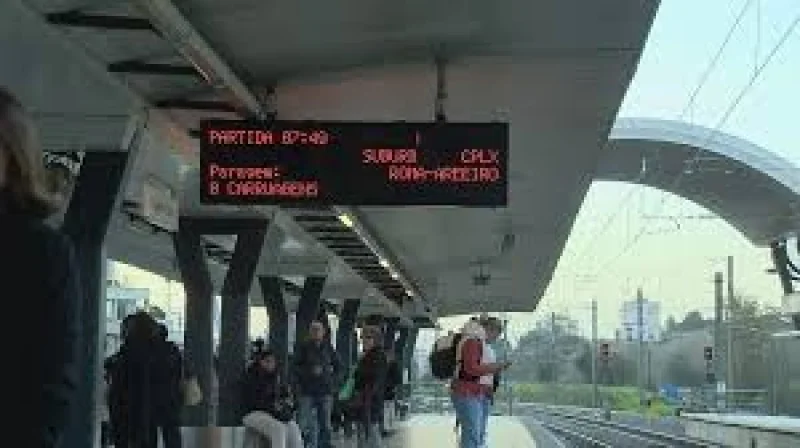
At the same time, Ramalho singled out where the strike was stronger: the government said participation was greater in public-sector areas, notably education, transport and health — the sectors it identified as carrying the bulk of the day's stoppages. She noted the strike was the second such national action in a six-month period and stressed that "Tem muito pouca adesão no setor privado, que é o setor em que se vai aplicar primacialmente esta legislação," adding that "Os trabalhadores do setor privado não queriam esta greve."
Her account of normal functioning, however, contains an awkward detail. Ramalho acknowledged some "indirect effects" at TAP and said transport had been conditioned in places — a concession that sits uneasily with her repeated assertions that attendance, logistics and commercial transport showed no disruption. She also said the government "ouve toda a gente, respeita integralmente o exercício do direito de greve, mas naturalmente o que lhe cabe é ouvir toda a gente, incluindo os que querem trabalhar," a line that both defends the state's stance and underscores how contested the day's events remain.
The immediate consequence is political: the minister framed the strike as primarily a public-sector phenomenon at a moment when the labour overhaul under debate will mostly affect private employment. That framing matters because it narrows the government's offensive — and its political exposure — if private workplaces truly remained open. For readers following other Portugal developments, the day’s news sits beside lighter items such as the provisional World Cup squad ( and club-level selections ( but the government's verdict on the strike will shape the labour debate now moving through parliament.
What remains unresolved — and is the most consequential gap from Wednesday's briefing — is precise, sector-by-sector participation data. The minister offered categorical characterizations and lists of where activity continued, but she did not supply a breakdown of numbers to show how many workers joined the strike in education, transport, health or in specific private industries. That absence leaves the central question of scale open: without detailed figures, the dispute over whether the reform faces widespread private-sector resistance will be fought on assertion rather than on transparent evidence.