





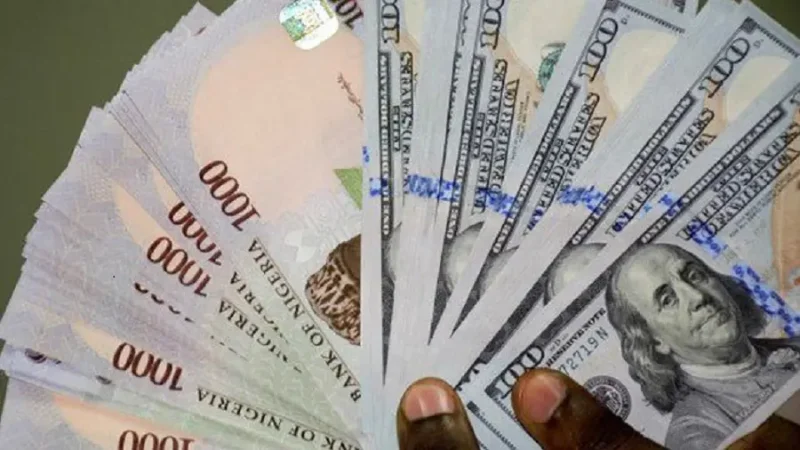
The naira strengthened at the official foreign exchange market on Tuesday, June 2, 2026, closing at N1,361.05 to the dollar — an appreciation of N5.74 from Monday’s N1,366.79 close, Central Bank of Nigeria data showed.
Readers searching “naira rate june 3 2026” are looking for the most recent market reading after that move; the official market’s one-day gain and a fresh reserves figure left traders and importers recalibrating their positions as markets opened on June 3.
Official data show the move was the clearest, dated change: the formal market recorded the N1,361.05 closing rate on June 2, compared with N1,366.79 on June 1. The official market had traded in a higher band earlier — the Nigerian Foreign Exchange Market recorded a high of N1,375 and a low of N1,372 during the June 1 session — and the last available official start-of-trading rate before these moves was N1,373.25 on May 29.



At the same time that the official rate firmed, Nigeria’s foreign reserves rose to $49.80 billion as of June 1, a figure market participants flagged as the most recent evidence of central liquidity available to back the currency. That combination — a stronger official rate and a larger reserves buffer — is why the formal market’s move carried weight for importers and banks who transact through official FX channels.
But the clearest friction is the gap between the official market and the parallel market: the black market rate remained unchanged at N1,395 per dollar on both June 1 and June 2. That stagnation in the parallel market, even as the official rate improved by N5.74 in a single day, underscores a persistent split in pricing and access to dollars. For dollar buyers who cannot access official windows, the unchanged N1,395 rate means no immediate relief; for firms that can transact officially, the cheaper rate briefly reduces cost pressures. The mismatch raises the question of whether the official move reflects genuine, broad-based dollar supply or simply a temporary technical re-pricing confined to formal channels.
The practical consequence is immediate: importers, FX traders and companies reliant on dollar payments must choose between official windows now offering N1,361.05 and a parallel market still quoting N1,395 — a gap large enough to affect margins and working capital decisions. Market participants will be watching whether the official market keeps tightening the spread by sustaining lower rates backed with reserves or whether the black market reprices downward once any additional dollar supply reaches broader market participants.
The next and most consequential question is whether the divergence narrows. Will fresh official interventions and the reported $49.80 billion reserves translate into a steady, lower official rate that drags the parallel market down, or will access constraints keep the black market at its current level and preserve a two‑tier system? The answer will determine whether Tuesday’s N1,361.05 close is the start of a converging trend or a single-file move that leaves most dollar users unchanged.