



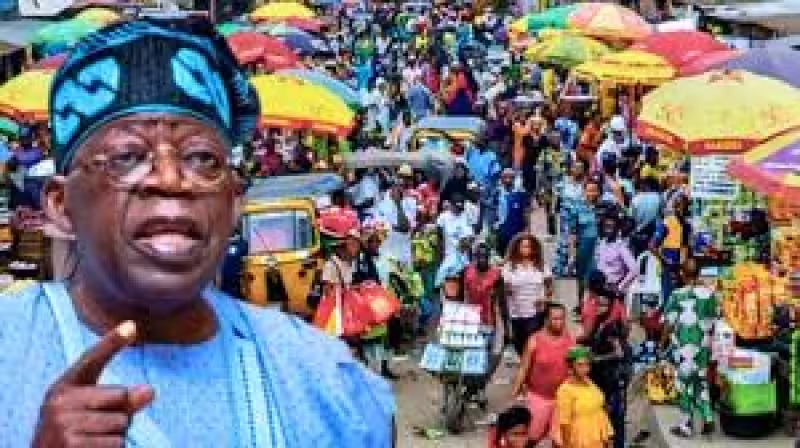
President Bola Tinubu told visiting governors on Friday that removing the fuel subsidy — announced on May 29, 2023 — prevented an imminent national bankruptcy and has laid the foundation for an economic recovery. He spoke as he hosted governors who came to celebrate Sallah and mark the third anniversary of his administration.
Tinubu singled out revenue as central to that claim, saying improved revenue allocation to states has changed how subnational governments fund wages and projects. He told the gathering, which included governors from 15 states and two deputy governors, that clearer flows of revenue had allowed states to meet salary obligations, cut borrowing and resume development work.
It was a direct case: "It was challenging at the time, but we survived. We faced litigation and accusations. We survived them. Instead of bankruptcy, Nigeria has survived. The economy has recovered. It is growing. Agriculture is booming," Tinubu said, framing the subsidy removal as the trigger for broader improvements in macroeconomic indicators, revived infrastructure projects and a boost to farming.
Tinubu urged patience for painful reforms and credited citizens for endurance: "You persuaded our people to be patient and endure these three years of painful reform, during which we put the economy on a reset. Today, the benefits are showing," he said, adding that governors were no longer reliant on federal interventions to pay salaries. "I’m glad governors are no longer borrowing from the federal government and asking for interventions and not knowing how to survive, how to pay salaries, no more. You kept the spirit, you kept the hope," he told the visitors.
Those endorsements are the weight behind his claim that ending the subsidy restored fiscal stability: Tinubu argued years of subsidy payments drained national resources and diverted investment from critical sectors, and that the move freed funds for infrastructure, housing and agricultural expansion. He described the decision to strip the subsidy as difficult and painful for many Nigerians but necessary to avoid fiscal collapse and restore long-term stability.
At the same time, the move that Tinubu credits for stabilising public finances also triggered immediate and visible pain. The removal of the subsidy set off a surge in petrol prices, higher transportation fares and rising costs for goods and services — changes that hit households and businesses across the country the moment fares and pump prices climbed. Tinubu acknowledged those sacrifices while insisting the long-term tradeoff was preferable to bankruptcy and economic stagnation.
The president tied the subsidy decision to a package of wider reforms — in foreign exchange management, fiscal discipline, social investment and infrastructure spending — and said stronger federal–state collaboration had helped turn things around. He pointed specifically to agriculture as an area now "booming," and to roads and housing projects that are being revived or completed as proof that redirected spending is producing results.
Yet the account Tinubu offered leaves an open, sharp question: how much of the recovery he credits to the subsidy removal can be isolated from the other reforms his administration cites? His assertion that macroeconomic indicators are improving and that states benefit from stronger revenue allocation is supported by his direct statements, but the precise contribution of subsidy removal versus simultaneous policy changes is not spelled out.
The most consequential unanswered question from Friday’s address is this: will the government publish a transparent, itemised assessment showing which reforms produced which economic outcomes and when independent verification will be available? Tinubu said his administration will continue to pursue "people-oriented policies," but he did not set out a timetable or a public accounting that would let Nigerians measure how much of the recovery comes directly from ending the subsidy and how much stems from the other policy shifts he lists.