





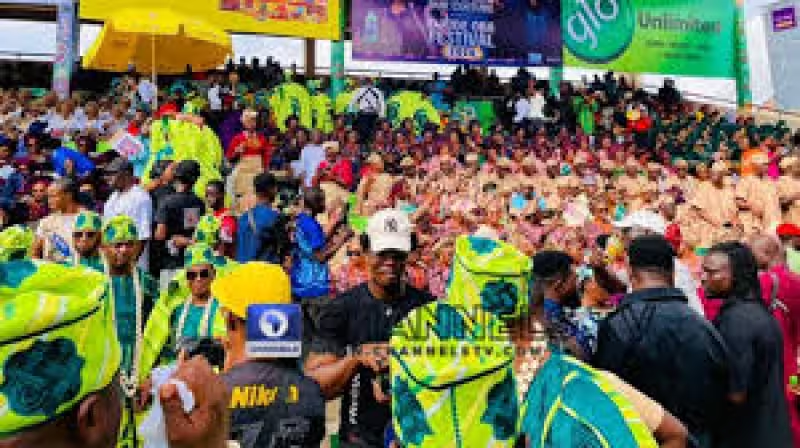
The 2026 Ojude Oba Festival officially commenced in Ijebu-Ode on Friday, drawing thousands of guests to the town square for music, drumming, dancing and the first major public show of culture since the passing of the late Awujale of Ijebuland.
People are searching for ojude oba festival now because this year’s edition is not only the calendar’s largest cultural gathering in Ogun State but also the first held after Oba Sikiru Kayode Adetona’s death, making every procession and appearance both celebration and public reckoning with a changed royal chapter.
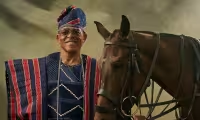
Proof of scale arrived in plain sight: thousands streamed into the grounds in coordinated family regalia and traditional attire, while notable figures joined the crowd. Seyi Tinubu attended the opening, and Solomon Adeola, popularly known as Yayi, arrived alongside supporters. Farooq Oreagba made a striking entrance on horseback, mounted and wearing a white agbada and a purple cap, a moment that halted conversations as cameras and phones turned to follow him. Music performances and networking sessions were already underway as more guests trooped in, underscoring how the festival’s mix of pageantry and commerce continues to attract national attention.
The festival’s visual language — coordinated aso-oke, lace and other adorned outfits, horse-riding processions and family displays — was on full display to remind attendees why Ojude Oba translates as “The King’s Court” and why it began as a post-Eid gathering of Muslim faithful paying homage to the Awujale. Over the years the event has evolved into one of Nigeria’s biggest cultural and tourism draws, and Friday’s opening carried that weight in every colour and drumbeat.
Organisers insisted the celebration must continue in honour of the monarch’s legacy and lifelong commitment to preserving Ijebu culture, and that decision shaped the day. That insistence creates a tight and unavoidable friction: a festival built on homage and continuity proceeding at full throttle even as the community adjusts to a royal transition. The choice to press on turned routine procession planning into an act of public memory, and every horse ride and family parade was read as both cultural performance and tribute.
What happens next is plainly visible in the day’s itinerary even where a minute-by-minute public schedule was not released: several groups and age grades are expected to begin their colourful processions, and the Balogun horse-riding families are due to showcase their martial heritage, wealth and prestige. Those processions — the choreographed parades of age grades, the Balogun displays on horseback, and the accompanying music and dance — will determine how the festival balances ceremony and mourning. Observers and visitors will watch those displays closely today as the event moves from its opening spectacle into the sustained parade of pageantry that defines Ojude Oba.