




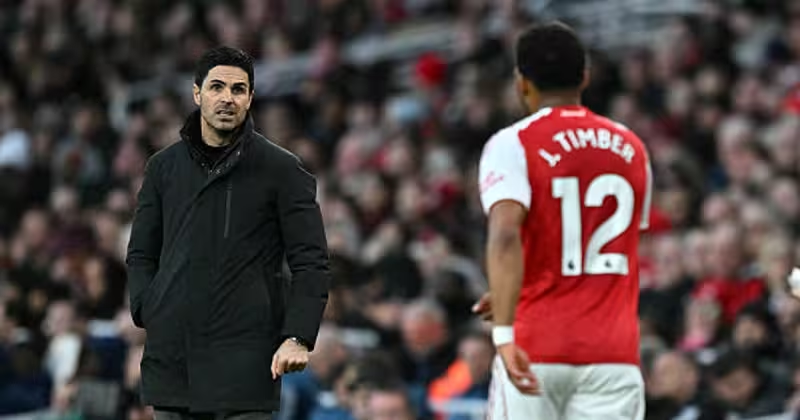
What changed now: Mikel Arteta is facing a final-day selection problem — whether to start Jurrien Timber or Cristhian Mosquera at right-back for Arsenal in the Champions League final at the Puskás Arena in Budapest, after Timber returned to contention following a serious groin injury that kept him sidelined for more than two months.
Why João Neves is being searched now: attention around the matchweek has also kept João Neves in the headlines, after a recent handball incident that denied Bayern a penalty — a moment covered earlier by Round Time News that left his name trending among supporters and pundits alike (
The evidence pushing Timber back into the conversation is straightforward. Timber has fully recovered and is available for selection. Over the last two seasons he has played 91 matches, and that workload, paired with his return to fitness, is the practical reason he’s seen as a ready solution to Arsenal’s right-back questions — a role made more urgent by Ben White’s long-term knee issue.
That same evidence also explains why Mosquera is still a genuine option. Cristhian Mosquera has been a stability figure in Arsenal’s recent run, helping the side keep clean sheets in crucial matches this season. In a one-off final against a team that carries genuine attacking firepower, steadiness and recent match rhythm are valuable currency.


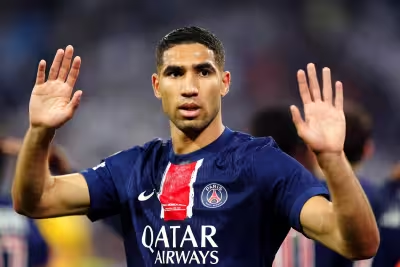
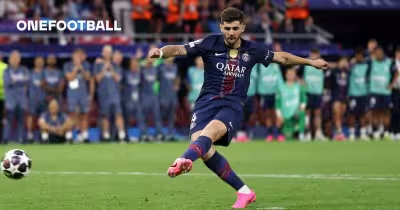
Khvicha Kvaratskhelia adds weight to the dilemma. The Georgian winger is in strong form and has scored 10 goals in European competition this season, a tally that makes the Arsenal right-back choice more than a local tactical quibble: it is a decision about who will be trusted with shutting down PSG’s dangerous wide threat on the day.
The risk around Timber is clear and immediate. On paper he is the ideal pick — the senior, experienced defender whose qualities match the opponent — but he returns after more than two months out and without recent competitive minutes. The heavy workload that took him to 91 appearances over two seasons is also widely linked to the groin problem that sidelined him. That combination of rust and recent injury creates an obvious selection risk: if Timber is not at full match sharpness, his positional instincts and timing could be compromised against Kvaratskhelia.
Arteta’s counterargument is simple: Timber’s superior defensive ability and experience against top attackers could outweigh any short-term lack of rhythm. Mosquera offers the opposite trade-off — less flash, perhaps, but continuity and the proven ability to contribute to clean sheets in big matches. For a manager on the brink of European glory, choosing between a returning starter and a steady understudy is the core tactical squeeze of the week.
What happens next is decisive and immediate. Arteta must settle the right-back decision in Budapest ahead of kick-off. His choice will reveal whether Arsenal trust Timber’s class and recovery enough to match him directly with Kvaratskhelia, or whether they prefer Mosquera’s recent form and reliability to try to blunt PSG’s threat. That single selection — Timber’s recalled talent versus Mosquera’s steadiness — is the clearest, most consequential unanswered question before the final whistle.