





U.S. stocks closed at record highs on May 29 as the Dow Jones Industrial Average climbed 0.7% and finished above 50,000 for the first time, a move investors said was buoyed by fresh corporate results and hopes of easing geopolitical risk. President Donald Trump posted on Truth Social that he would soon make a final determination on a possible deal with Iran and reiterated his red line for the Strait of Hormuz, saying it must be immediately open, without tolls, and allow unrestricted shipping both directions.
The reason readers are searching 500 now is simple: the S&P 500 notched its ninth consecutive weekly advance, the longest winning streak since 2023, extending a run that has become a focal point for traders weighing whether the rally can keep running. The S&P 500 and the Nasdaq Composite each added around 0.2% on the day, carrying the major indexes to simultaneous records.
The market’s lift had a clear corporate engine. Dell’s earnings report and outlook tied to demand for data‑center servers pushed its stock as much as 40% higher, and the late‑week surge — Dell was up roughly 33% on Friday after stronger‑than‑expected results — rippled through hardware suppliers. Hewlett Packard and Super Micro Computer jumped on the session, while chip and memory names that have led recent gains showed sharp monthly moves: Micron surged more than 80% during the month, AMD advanced over 40%, and SanDisk rose nearly 50%. Technology has been the best‑performing sector since the March 30 market lows, and traders said the AI trade remains the principal momentum motor.



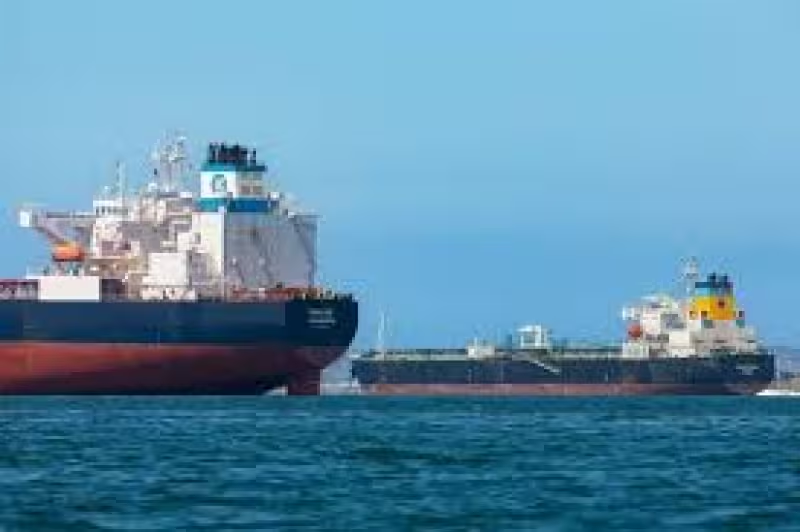
That momentum intersected with politics. Markets have been buoyed by hopes that a U.S.‑Iran agreement would ease oil‑price risk and remove a tail threat to growth expectations; before the war the Strait of Hormuz carried 20% of the world’s oil. Trump’s post came after he signaled last week that talks were in the final stages, and his timing comment — that a final determination would come soon — helped investors link the diplomatic timeline to the market rally. At the same time, conflicting signals from both Washington and Tehran left traders unsure whether a definitive breakthrough was actually close, a gap that kept some buying cautious despite headline highs.
Oil and monetary policy considerations added friction. Traders pointed to easing oil prices as one input that undercut inflation worries and supported equities, but they also noted that any renewed disruption around the Strait of Hormuz could quickly reverse risk sentiment and push markets to reprice Federal Reserve expectations. That contradiction — positive corporate news and fading near‑term geopolitical risk versus the possibility of renewed confrontation — is why some investors framed the advance as conditional rather than irreversible.
For now, the math of the rally is clear: the Dow rose by more than 350 points to seal the milestone, all three major indexes closed at records, and the S&P’s nine‑week run has become the calendar’s headline. Yet the decisive factor for markets in the coming days will be whether Trump’s promised determination produces a verified agreement or another round of mixed signals. Traders will be watching any official language about the Strait’s status and the timing of an announcement, and corporate calendars will test whether AI‑driven earnings can sustain the gains.
If investors are searching for where the next risk lies, it is exactly that — will a U.S.‑Iran accord materialize, and when — a single unanswered question that will determine whether the new records are a foundation or a pause. Coverage of political and economic stories at home keeps that uncertainty in view; for readers tracking domestic headlines, see related coverage such as Omoyele Sowore Says ₦500,000 Minimum Wage Is Not Too Much.