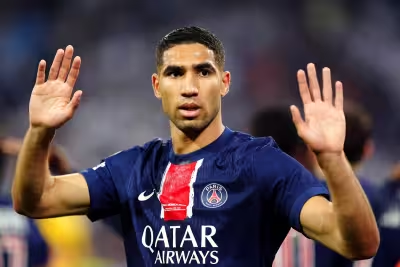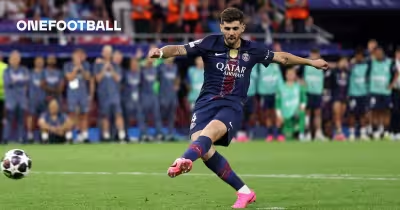
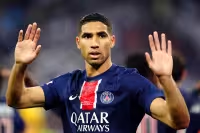

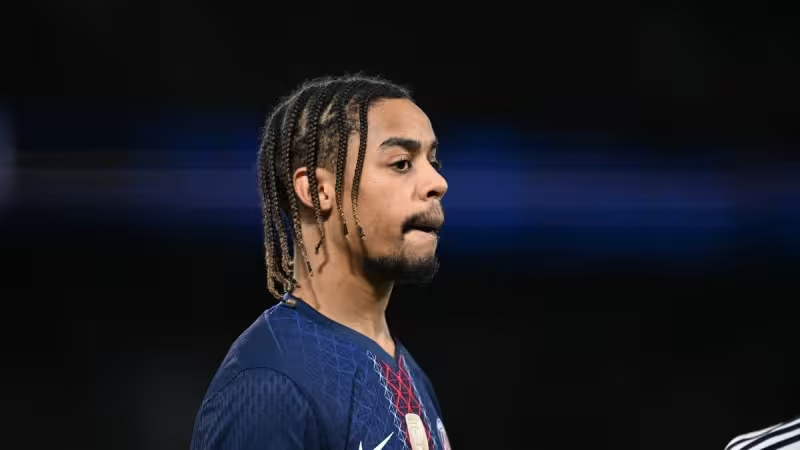
Liverpool has identified Bradley Barcola as the player it wants to groom as Mohamed Salah’s long-term successor on the right wing, a marked development in the club’s rebuilding plans.
The move has cropped up now because Barcola, 22, is entering the final two years of his contract with Paris Saint-Germain. PSG bought him for 45 million euros in 2023, and his contract situation makes him a plausible target for clubs searching for a young, top-level right winger.
Liverpool’s interest is not theoretical. The club is actively seeking a Salah replacement and has placed Barcola on a short list that also includes attention from Arsenal. Barcola has been described inside PSG as a major attacking asset, and he spent much of the summer of 2025 thinking about his situation, a sign that both player and club see the next two seasons as decisive.
Valuation and timing are central to why Liverpool sees Barcola as realistic. One projection priced a sale at 70 to 80 million euros in 2026, a sizable markup on PSG’s 45 million-euro outlay two years earlier. That estimate underpins the idea that Liverpool would be paying for both present ability and long-term upside — the transfer would be an investment in a player still under contract for two years.


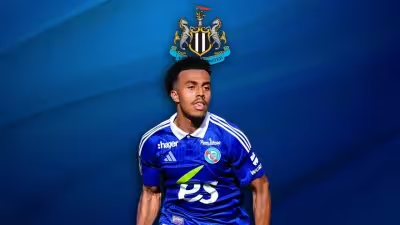
At the same time, there is an internal planning thread at PSG that would change the calculus. A sale in that 70–80 million range could free 50 to 60 million euros PSG might use to pursue Maghnes Akliouche of AS Monaco — a player PSG has tracked for two years. That chain — Barcola out, Akliouche in — is the scenario some strategists inside European clubs are quietly preparing for.
But the situation is not settled. While one source presents a Barcola sale as likely in 2026, PSG has not yet communicated and nothing is settled. That contradiction matters: Liverpool can identify a target, value him, and plan a succession, but the transfer only happens if PSG decides to sell and if a buyer meets both price and timing demands. Barcola is reportedly tempted by the idea of joining Liverpool, which could help persuade PSG to listen. Yet the club’s stance remains unclear.
The practical next steps are straightforward and blunt. Liverpool would need to turn interest into an offer that meets PSG’s valuation and calendar. If the English club wants Barcola before his final contract year, it must act on a schedule that forces decisions from PSG and from the player. If Liverpool waits until 2026, the price could rise or fall depending on Barcola’s form and PSG’s appetite to reinvest in targets such as Akliouche.
The single most consequential unanswered question is whether Liverpool will submit an offer large enough and timed precisely to trigger PSG’s domino plan — a bid that would not only bring Barcola to Anfield but also fund PSG’s move for Maghnes Akliouche. If Liverpool cannot or will not meet that threshold, Barcola will remain an influential PSG attacker; if it can, both clubs’ attacking lines will look very different by the end of the next transfer cycle.