





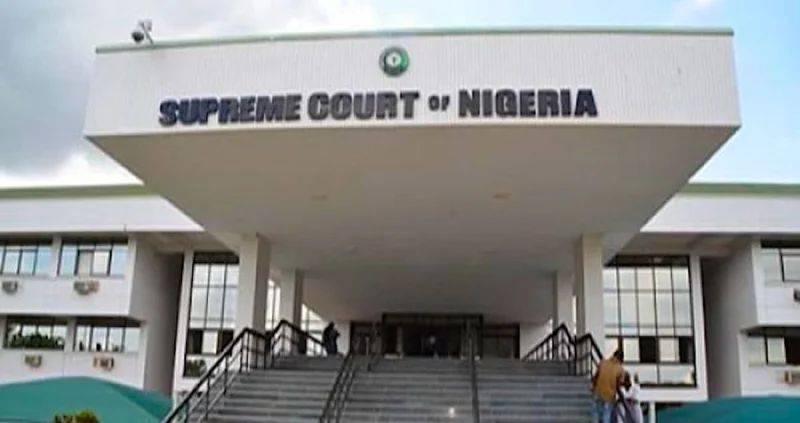
The Supreme Court of Nigeria on Monday in Abuja set aside an order issued by the Court of Appeal that had frozen the assets of Nestoil Limited and Neconde Energy and those of their principal promoters, a five-member panel ruled.
The ruling matters now because it immediately removed the legal barrier that had put Nestoil at the centre of a cross-court fight over access to company accounts, shareholdings and even the company headquarters — items that a receiver had already been authorised to seize.
The dispute began when FBN Quest Merchant Bank and First Trustees sought to recover more than $1 billion and N430 billion they say are owed by the two oil firms and their promoters. On the strength of that claim, Justice Deinde Dipeolu of the Federal High Court, Lagos granted a Mareva injunction freezing accounts and shareholdings across more than 20 financial and corporate institutions and empowered the receiver/manager, Abubakar Sulu-Gambari, to take possession of Nestoil’s headquarters and assume control of Neconde’s interest in OML 42; the receiver took that possession on 22 October 2025.
The case moved quickly and unevenly through the courts. Justice J. Osiagor revoked the earlier receivership-enforcement order on 20 November 2025. FBN Quest and First Trustees appealed on 22 November and, on 29 November, the Court of Appeal issued a restorative injunction in an ex parte application that reversed Osiagor’s revocation and restrained Nestoil, Neconde and their agents from obstructing the receiver pending the appeal.
That Court of Appeal injunction is what the Supreme Court has now set aside. Chief among the panel’s findings was a sharp rebuke of the appellate court’s handling of the matter: the bench said the Court of Appeal assumed jurisdiction and granted an injunction when the dispute was not properly before it. Justice Stephen Adah told the courtroom that the appellate court exceeded the limits of its power by issuing the ex parte order, and the Supreme Court criticised the lower court for misusing the judicial process when it stayed proceedings at the Federal High Court, Lagos.
The procedural knot is the story’s tightest seam. On 12 January the Supreme Court directed all parties to return to the Court of Appeal so that the appellate court can resolve a major procedural issue — who properly represents the parties in the matter. That instruction follows other signs of judicial friction: the case was reassigned by John Tsoho amid allegations of bias and misconduct, and the sequence of injunctions and revocations has left enforcement in limbo despite earlier orders directing multiple security agencies to assist the receiver.
The immediate consequence is clear: the ex parte restorative injunction that had sustained the receivership-enforcement posture is no longer in force by virtue of the Supreme Court’s ruling. What comes next is the Court of Appeal’s decision on the procedural representation issue the Supreme Court flagged — the appellate court must now determine whether it had authority to hear the appeal and who may speak for each party. That ruling will decide whether Abubakar Sulu-Gambari’s control over seized assets and Nestoil’s headquarters is reinstated, modified or finally set aside, and it will determine whether the banks’ effort to recover the sums claimed proceeds under receivership or stalls back into fresh litigation.