




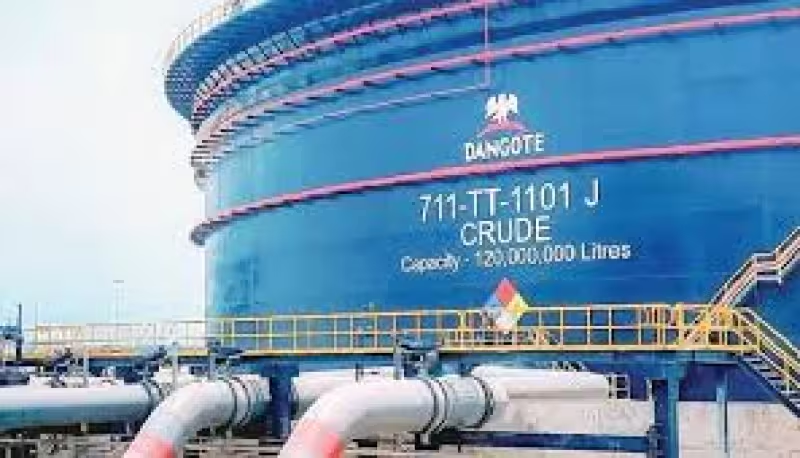
Dangote Refinery raised its ex-depot price of Premium Motor Spirit to N1,350 per litre, the company confirmed Wednesday, marking a N75 increase from the previous N1,275 per litre.
The new gantry price was implemented across all loading channels and follows a string of adjustments this month: about a week earlier the refinery had raised its ex-depot price from N1,200 to N1,275 per litre, and on April 29 it increased the ex-depot price of petrol by N75. Within seven days, Dangote Refinery recorded a second N75 increase, and this change is the refinery's first fuel increase in the month of May.
Market players said a temporary halt in the issuance of pro forma invoices earlier in the week constrained product availability and complicated deliveries while the new gantry price was rolled out. Marketers were adjusting their pricing templates after the new pricing template was activated across the board, forcing quick recalculations of wholesale and retail margins.
Analysts and market observers link the moves to a cluster of supply-side pressures: crude sourcing costs, foreign-exchange volatility, logistics expenses and domestic distribution dynamics. The dangote refinery petrol price increase is expected to cascade into higher pump prices across the country as marketers pass the added ex-depot costs down the chain.

The numbers make the immediate effect clear. The refinery's ex-depot moved from N1,200 to N1,275 in the space of days, then to N1,350 on Wednesday — two N75 increments in roughly seven days. With the gantry price now uniform across all loading channels, wholesale buyers face a higher baseline for deliveries purchased straight from the refinery.
The sequence also exposed friction between supply management and retail readiness. The temporary suspension of pro forma invoices limited short-term access to product documentation that some buyers use to plan stock and logistics, and marketers said they had to pause or recalibrate supply orders while new templates and prices were applied.
For consumers the consequence is predictable: retailers will confront higher acquisition costs and most are likely to reflect that at the pumps. The refinery's repeated adjustments this month—coupled with the activated pricing template and constrained invoice issuance—create a narrow window for marketers to absorb margins before choosing to raise dealer prices.
This set of moves suggests a near-term tightening of fuel availability and higher retail fuel bills as the immediate outcome. The most consequential fact now is whether marketers will keep margins thin to smooth the transition or move quickly to recalibrate pump prices, a decision that will determine how fast motorists feel the impact of the refinery's policy changes.