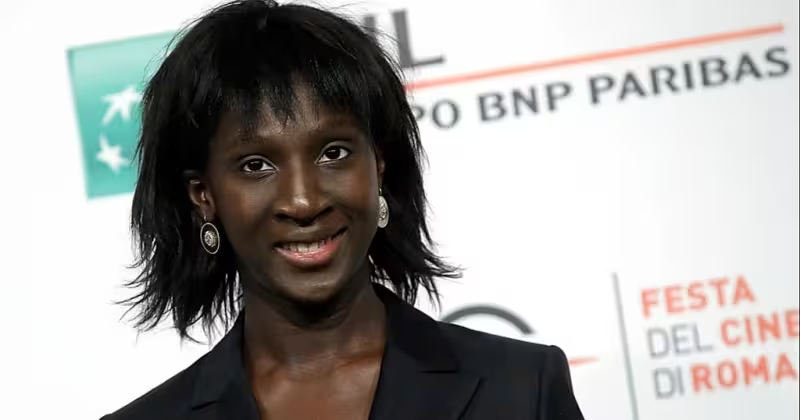
Eye Haïdara walked onto the Croisette on Tuesday to host the opening of the Cannes Film Festival’s 79th edition and called the moment "like a dream," saying the reality sank in only after the public announcement and that the night was "above all, a celebration of film."
The spectacle mattered for a simple reason: the event has become a forum where artistic ambition collides with political and technological quarrels. The competition this year includes 22 films vying for the Palme d'Or and a nine-person Palme d'Or jury that must weigh art in the middle of those debates. Before the screening of the opening film, the French drama The Electric Kiss, Irish-Scottish screenwriter Paul Laverty used a press conference to accuse parts of the industry of punishing artists for their views, asking, "Isn't it fascinating to see Susan Sarandon, Javier Bardem and Mark Ruffalo blacklisted because of their views in opposing the murder of women and children in Gaza?" and adding, "Shame on Hollywood, people who do that."
Those sharp remarks landed against comments from Cannes director Thierry Fremaux earlier in the week. On Monday Fremaux declined to take a political position in his opening remarks while speaking out against artificial intelligence’s effects on the industry and told audiences, "What is certain... is that here in Cannes, we stand with the artists, we stand with the screenwriters and we stand with everyone in these professions, with actors and voice actors alike," framing the festival as a protective space for creators even as it refuses to endorse a single political line.
The debate over technology threaded through public remarks as well. Actress Demi Moore addressed artificial intelligence directly, saying, "There is nothing to fear (about AI) because one can never replace what true art comes from, because it comes from the soul," a sentiment that underpins a larger concern among participants about how AI will change creative labor.
Those cultural and political fights are tied to institutional choices. On Monday the festival announced it had signed a multi-year sponsorship deal with Meta, a move critics and supporters have already framed through the lens of the same AI anxieties and the hard questions about where festival funding should come from in an age of powerful tech platforms.
Organizers and artists are mindful of recent history. Last year the Palme d'Or went to the Iranian film It Was Just an Accident by Jafar Panahi, and that memory of politically inflected prize decisions hangs over any discussion of what Cannes honors and why. The festival itself is described as a key global platform for cinema, and that platform means disputes that elsewhere would stay private can play out in public on the Riviera.
Context sharpens the stakes. The supplementary coverage of the event notes the competition’s 22-film slate and says the festival opened amid debate over artificial intelligence, Hollywood’s limited presence in Cannes this year, and criticism of the industry’s silence on Gaza. Activists have pushed European festivals to condemn Israel’s war on Gaza, and those pressures surfaced in Laverty’s remarks and in conversations across the festival perimeter.
The tension is real and structural. Fremaux’s refusal to take a political line sits uneasily beside vocal artists demanding accountability. Laverty’s public rebuke of Hollywood and the presence of a high-profile tech sponsor make clear that Cannes is not only adjudicating aesthetics but also negotiating who gets a voice and who pays for the stage.
By the time the red curtains closed on the opening night, Haïdara had returned to a simple promise about her role: "Personally, I want to be as sincere as possible." If sincerity means staging honest argument as well as projection, then this festival will not be able to keep politics and technology at arm’s length. Over the next two weeks, the jury will award the Palme d'Or while the industry, artists and activists continue to test whether Cannes remains primarily a celebration of craft or the place where cultural accountability is decided.
Related reading: Genevieve Nnaji Joins Cast of 's Wahala as Filming Begins on Six-Part Thriller and Amvca 2026: Lagos prepares for March awards as Young Filmmakers Day spotlights new voices