




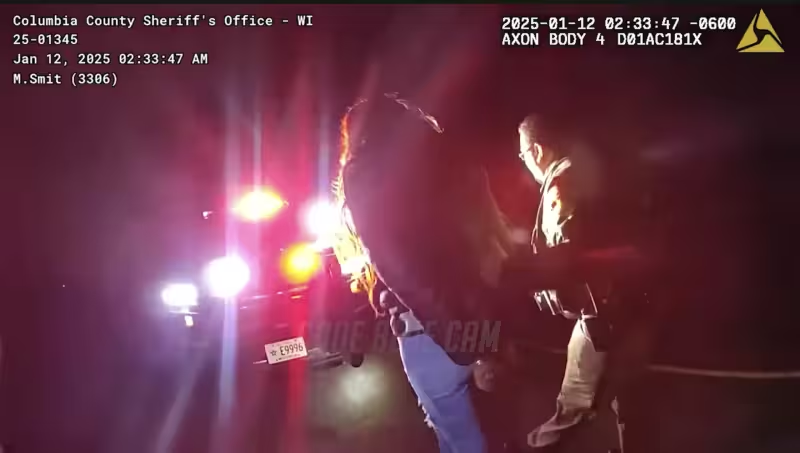
A most-watched Code Blue Cam clip shows a 33-year-old motorcyclist in 2021 accelerate to 100 mph while an officer follows, hit an SUV at the two-minute mark and be pronounced dead on scene; the channel blurs the body in its upload. LJ, the operator of the La Crosse-based channel, defends the selections, saying edits are made for "privacy and safety reasons" and to provide "proper context."
Code Blue Cam is not a small hobby. The channel, based in La Crosse, Wisconsin, has more than 3 million subscribers and 1.15 billion total views. Its most-seen video alone has more than 21 million views; that clip contains the motorcycle crash in Onalaska. According to VidIQ, the channel makes around $100,000 each month from videos, and it runs affiliate links for products like security and dash cameras. Twelve people now work for Code Blue Cam.
The content itself is drawn almost exclusively from police body camera video obtained via open records requests. The clips are edited to show the most lurid, embarrassing or sensational moments and are presented with dramatic music, voiceover, jokes that mock arrestees, mugshots, sirens and other flourishes. Code Blue Cam says it is "on education and informing the public, rather than on public shaming or ridicule."
That combination of reach, revenue and style matters because it turns raw police footage into a highly curated media product. The channel has moved beyond independent posting: as of 2025, Code Blue Cam has partnered with the Wisconsin Professional Police Association, and last year LJ donated $10,000 to help fund a museum honoring the state’s law enforcement heroes. LJ also contacted WPPA Executive Director Jim Palmer to express Code Blue Cam’s desire to support the organization’s advocacy of police in Wisconsin.

The friction is obvious. The channel frames its work as public service and says the edits show "what officers experience daily," and that it highlights "law enforcement heroes." Yet the editing choices — the focus on sensational moments, the music and the mocking voiceover — amplify shock value. The presence of affiliate links and the $100,000-a-month revenue figure show this is a profitable media business, not merely an exercise in transparency. Those facts sit uneasily with the channel’s educational claim.
That tension is easiest to see in the Onalaska clip. The footage begins as a pursuit, accelerates to the cited 100 mph and ends with a collision at the two-minute mark; paramedics pronounced the rider dead on scene. The channel blurs the body in its clip, a choice LJ says is for "privacy and safety reasons," but every other element of the upload — the soundtrack, the cutaway mugshots and the punchlines — pushes viewers toward a particular emotional reaction.
Code Blue Cam’s reach and partnerships also shift the framing of ordinary police encounters. With more than a billion views and millions of subscribers, the channel doesn’t simply publish records requests; it packages them. Its ties to a statewide police association and a donation to a law enforcement museum further align it with institutions it claims to document. Those alignments complicate the promise of neutral public education.
Readers should treat the channel’s videos as curated, commercially driven content with a clear sympathetic tilt toward policing, not as neutral archival footage. The facts — massive audience, substantial monthly revenue, sensational editing choices, affiliate links, a WPPA partnership and a recent donation to a law enforcement museum — support a firm conclusion: Code Blue Cam operates primarily as a profitable, attention-driven media enterprise that frames itself as educational while amplifying sensational police encounters.