



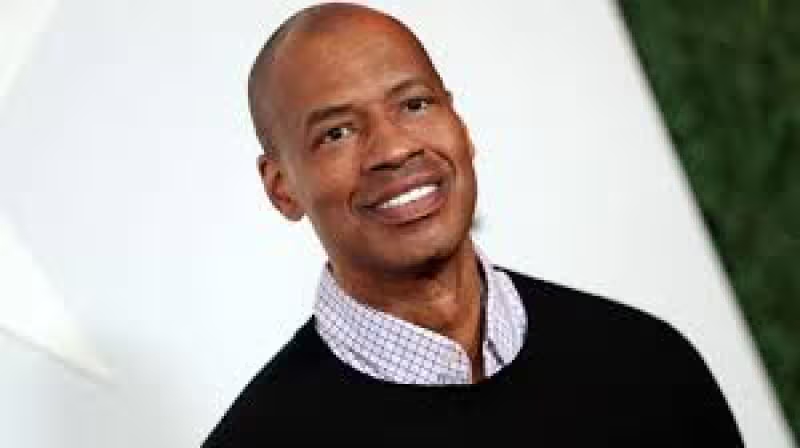
Jason Collins died Tuesday at 47, his family said, after a valiant fight with glioblastoma and following a public battle with an aggressive, inoperable form of brain cancer.
The National Basketball Association shared the family statement announcing Collins' death and NBA Commissioner Adam Silver said Collins "helped make the NBA, WNBA and larger sports community more inclusive and welcoming for future generations," adding that "Jason will be remembered not only for breaking barriers, but also for the kindness and humanity that defined his life and touched so many others." The Brooklyn Nets said they were heartbroken about Collins' death.
Collins became a touchstone in sports equality when he came out in a 2013 Sports Illustrated front-page cover story; he wrote in that essay, "I'm a 34-year-old NBA center. I'm Black and I'm gay." At the time he was the first active male athlete on a major American professional team sport to come out, and he later became the first openly gay athlete to ever play across any of the four major US sports leagues.

On the court, Collins' career stretched 13 seasons across six teams. He began his NBA career with the New Jersey Nets, rejoined the franchise after it moved to Brooklyn, and retired in 2014. His visibility off the court earned him wider recognition, including a place on Time Magazine's 100 most influential people list.
Collins had revealed last year that he had been diagnosed with cancer and was undergoing treatment. In December 2025 he said the cancer was discovered after he was struggling to focus; doctors described the disease as an aggressive, inoperable glioblastoma and told him without treatment he would be dead within three months. His care included treatment with Avastin and a trip to Singapore for a targeted form of chemotherapy.
The contrast between Collins' public bravery and the speed of his illness was stark. He used his platform to urge authenticity — writing that "Your life is so much better when you just show up as your true self, unafraid to be your true self, in public or private. This is me. This is what I'm dealing with." Still, the diagnosis he announced last year proved relentless: an aggressive, inoperable brain cancer that medical teams described as life-limiting even as they pursued therapy.
What Collins changed is concrete: an active NBA player who publicly acknowledged his sexuality in 2013, then continued his life and career in ways that reshaped how fans and leagues understood what players could be. That combination of sporting achievement and visibility is the measure of his legacy — one the NBA and teammates credited in statements and that will endure beyond his death.