




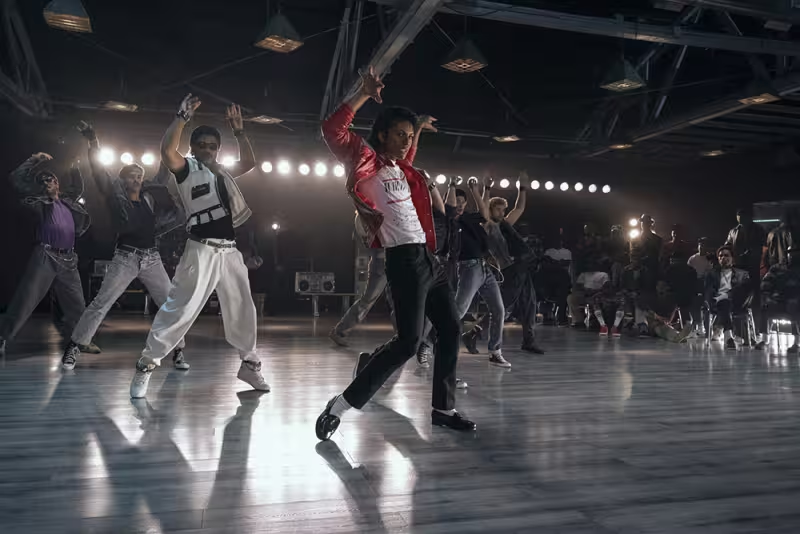
127-minute michael movie directed by Antoine Fuqua ends with Michael Jackson’s 1988 Wembley Stadium concert, when Jackson was 30 years old. The screen then flashes the on‑screen card "The story continues," positioning the film as a family‑sanctioned, sanitized account that follows Jackson from the Jackson Five to his solo peak rather than the controversies that followed.
Antoine Fuqua's 127‑Minute Michael
Friday, April 24 is the listed release date and the film carries a PG-13 rating, placing it in mainstream theatrical release territory. The production's runtime and rating align it with broad audiences while the epilogue card reading "His story continues" explicitly stops the narrative before the child sexual abuse allegations first surfaced, narrowing the film’s editorial scope.
1988 Wembley Stadium Concert Ending
1988 Wembley Stadium concert serves as the film’s final scene and the moment of commercial and narrative climax. Ending at that concert — a clear cut at Jackson’s peak at 30 years old — excludes the later public controversies and frames the release as a snapshot of ascent and superstardom rather than a comprehensive legacy audit.



Jaafar Jackson and Cast
Jaafar Jackson plays Michael Jackson as an adult, joined by Juliano Valdi as the 10-year-old Michael, Colman Domingo as Joe Jackson and Nia Long as Katherine Jackson, with Kendrick Sampson as Quincy Jones, Miles Teller as John Branca and Mike Myers as CBS president Walter Yetnikoff. Casting choices underline the film’s focus on career milestones and industry figures around Jackson’s rise, not the allegations that would emerge later.
1988 Wembley Stadium concert ending creates a visible tension: the film includes eccentric personal details — described in one review as giving viewers the chimp, the llama and the giraffe — yet omits what that same review called "the elephant in the living room." That contrast frames the picture as an early‑career portrait intended to avoid the most fraught elements of Jackson’s legacy while still merchandising his peak years.
"His story continues" appears as the closing on‑screen card, and that editorial decision is the clearest signal about what comes next: this installment deliberately confines itself to pre‑1988 material and leaves any later chapters as a separate commercial decision. For industry observers, the practical takeaway is that the film should be evaluated as a nostalgia‑led, risk‑managed release aimed at mass audiences rather than as a definitive reckoning with Jackson’s controversies.