



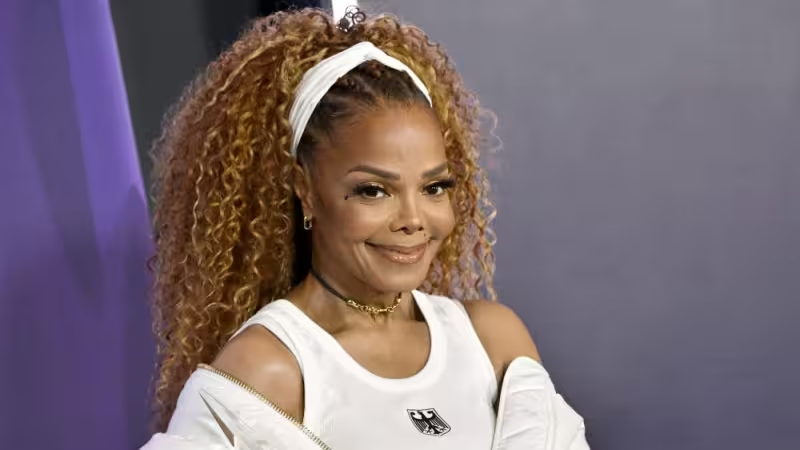
Janet Jackson does not appear as a character in Antoine Fuqua's biopic Michael, and at the film's Dolby Theatre premiere on Monday night her sister LaToya Jackson said Janet was asked to be portrayed and declined. "She was asked and she kindly declined so you have to respect her wishes," LaToya said, adding, "I wish everybody was in the movie."
The exclusion comes as the production absorbed high costs and legal limits: the Jackson estate paid up to $15 million for reshoots, and scenes showing Michael Jackson being accused of child molestation by Jordan Chandler were cut because a 1993 settlement barred depiction or mention of Chandler in any movie. Antoine Fuqua, the director, said family involvement mattered. "You’re telling somebody’s life, you want to make sure that they’re happy," he said, and added, "I have so much respect and love for Janet, but you know it’s OK. She’s supportive of Jaafar and that’s what matters."
The film portrays Michael Jackson at different ages: Jaafar Jackson plays Michael, with Juliano Valdi as the younger Michael. Joe Jackson is played by Colman Domingo; Nia Long appears as Katherine Jackson; LaToya Jackson is portrayed on screen by Jessica Sula. Prince Jackson serves as an executive producer on the project, while Bigi Jackson and Paris Jackson are not involved.
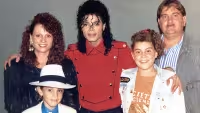
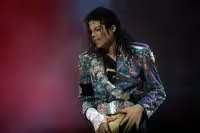
Paris Jackson has been an outspoken critic of the film. In September she said she had "0 percent involvement" and called parts of the production dishonest, later telling critics, "The film panders to a very specific section of my dad’s fandom that still lives in the fantasy. And they’re going to be happy with it." She also said she read an early draft and that when her notes were not addressed she "moved on with my life" and was otherwise uninvolved beyond that first feedback: "I wasn’t involved at all, aside from giving feedback on the first draft and then getting the feedback that [production] was not actually going to address your notes at all."
The film's pivot away from the Chandler material forced both editorial and financial changes. The studio cut the contested scenes and ordered reshoots tied to legal limitations from the 1993 settlement — a restriction that directly affected what the movie could show and reportedly contributed to the up-to-$15 million reshoot bill.
That mix of family participation and family distance is the story's tension. Fuqua has emphasized an effort to keep the Jackson family engaged: he called it "very important to have the Jackson family involved with the movie," and he framed Janet's absence as a personal choice rather than a studio decision. Yet several direct relatives — notably Paris and Bigi — declined to take part, and Paris's public denunciations underscore a split between the estate's financial backing and the views of some family members.
So what does Janet's absence mean for the film? In plain terms, it means her life is not dramatized on screen because, according to LaToya, she was asked and chose not to be portrayed; the director and members of the extended family have publicly backed the project while other Jacksons have openly rejected it. That division explains why the movie moved forward without Janet's character and why the production reworked material to comply with legal limits and the family's uneven involvement.