


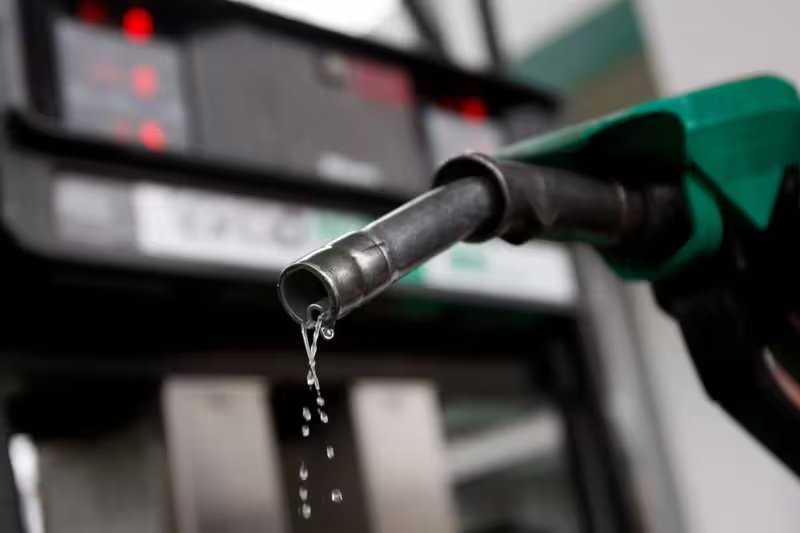
Nigerian filling stations in Abuja and nearby areas lowered petrol prices on Friday to N1,295 per liter from N1,330, a N35 cut that was visible at AA Rano, Ranoil and Mobil outlets across the capital. The change came as the Presidential Initiative on Compressed Natural Gas and Electric Vehicles signed a financing deal in Abuja to make it cheaper for motorists to switch away from petrol and diesel.
The agreement links Pi-CNG & EV with the Nigerian Consumer Credit Corporation, the National Credit Guarantee Company Limited and Moniepoint Microfinance Bank Limited, and is meant to expand access to credit for vehicle conversions. The participating institutions will provide loans and guarantee instruments to lower the upfront cost for motorists, commercial transport operators and fleet owners.
Ismail Ahmed said the programme rests on availability, acceptability and affordability, and that affordability is the core objective of the new partnership. He said ordinary Nigerians now have structured options to finance CNG conversions through trusted credit channels backed by guarantee support, and added that the initiative has 100,000 ready to deploy.



The federal government programme sits under President Bola Tinubu's Renewed Hope Agenda and was created to drive the adoption of compressed natural gas and electric vehicles across Nigeria. On March 26, Tinubu approved the expansion of PiCNG to include electric vehicles, widening a push that also aims to cut emissions, reduce fuel costs and build cleaner transport alternatives.
That broader push is unfolding alongside a more immediate price fight at the pump. Daily Post reported that several filling stations in Abuja have recently lowered petrol prices to attract patronage, and the president of the Independent Petroleum Marketers Association of Nigeria, Abubakar Maigandi, said the fresh downward adjustment by some stations is required to boost patronage.
For now, the two developments point in the same direction: cheaper petrol at the counter and cheaper financing for drivers who want to leave it behind. The question is how quickly that mix of price pressure and credit access can move conversion from an idea for a few operators into a real option for ordinary motorists.


