


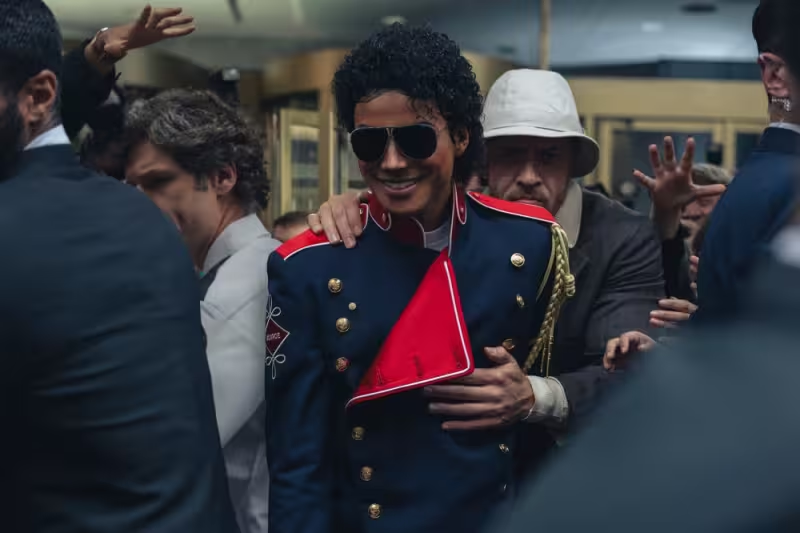
Jaafar Jackson, Michael Jackson’s 29-year-old nephew, is the face of Michael, the new film by Antoine Fuqua that opens Friday from Lionsgate and carries the story to the singer’s 1988 Wembley Stadium concert.
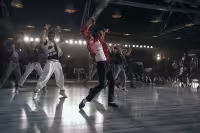
Jackson plays the adult Michael while Juliano Valdi appears as the 10-year-old in the film’s opening act; the picture culminates at Wembley in 1988 and closes with a title card that reads, "The story continues."
Fuqua directed the film and, by his account, assembled cast and crew last June for 22 days of reshoots to change the structure. Variety reported the production spent up to $15 million on additional photography; the final running time is listed as 127-minute.
The result, by the accounts circulated ahead of release, is a film built to showcase performance and family dynamics rather than to rehash old allegations. described Michael as a demi-biopic focused on performance and family tension, and The New Yorker reported the movie was designed to be an international crowd-pleaser — even calling it, in its words, "It’s awesome, man." Producer Graham King summed up the live-show charge simply: "Those of us that have been lucky enough to be at a Michael concert, it was fucking chaos." Antoine Fuqua, on the set and screenside, said plainly: "I enjoyed it."
That concentration on showmanship is the clearest production choice: the finished film removes material involving Jordan Chandler and his family after attorneys for the Jackson estate realized a 1993 settlement clause blocked depiction or mention of Chandler. The original version of Michael, according to the project timeline, began in 1993 with police raiding Neverland Ranch following an accusation that Michael Jackson had sexually abused a 13-year-old, Jordan Chandler; that family’s lawsuit was settled the same year for $23 million.
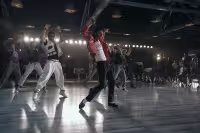

What remains in the movie is a family story centered on the friction between Michael and his father Joe and a career arc that stops at the height of fame. That omission sits against a public record that includes a 2005 criminal case in which Michael Jackson faced 10 charges related to allegations from another 13-year-old and was acquitted on all counts, and a 2019 documentary, Leaving Neverland, that chronicled new allegations from two more of Jackson’s alleged victims.
The change of focus produces the central tension in the film’s rollout: Michael is being positioned as an entertainment spectacle and family portrait even as the broader story of the entertainer’s life contains unresolved and contested accusations. Variety captured one blunt industry take on motives when it wrote, "sometimes People do Nasty Things for Some Money." Fuqua has said he was skeptical of some accusers and that he was not convinced Jackson did what he is accused of doing, a stance that helps explain the movie’s choices as much as the legal limits imposed by the 1993 settlement.
For Jackson himself the picture is a career-defining role: he carries scenes that propel the story forward from childhood into the adult performer who takes Wembley. The movie’s final card — "The story continues" — is a clear signal that the filmmakers wanted to stop the film’s frame at triumph, not at scandal.
That editorial decision answers the movie’s most basic question: Michael is intended and edited to celebrate performance and family chapters of Jackson’s life while explicitly sidestepping the Chandler episode and most of the public controversies that followed. Whether audiences accept that choice will shape the film’s reception in the weeks ahead.
Round Time News’ profile, "Jaafar Jackson Anchors Michael Movie at 1988 Wembley Ending," is available at and details Jackson’s central role in a movie that chooses the concert stage over the courtroom.