





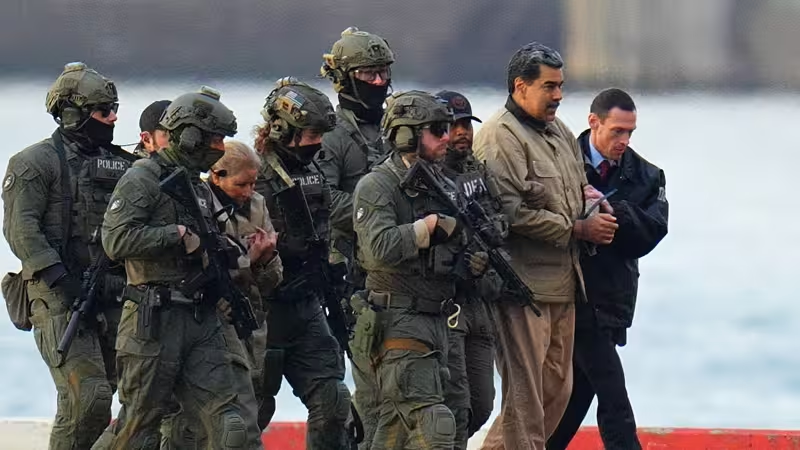
Federal authorities arrested special operations soldier Gannon Ken Van Dyke on Thursday after the Justice Department said he placed lucrative bets on a prediction market using classified or nonpublic information tied to the capture of Venezuelan President Nicolás Maduro.
The indictment alleges Van Dyke placed more than $33,000 in wagers on Polymarket in the days before President Donald Trump announced Maduro’s capture, including a $32,537 position that prosecutors say returned a 1,242% profit — $404,222 — and pushed the series of trades to more than $409,000 in net gains. Investigators say a trader who opened an account in Dec. 2025 placed $33,933 across four predictions tied to a U.S. invasion of Venezuela and Maduro’s removal from office.
The Justice Department charged Van Dyke with unlawful use of confidential information for personal gain, theft of nonpublic government information, commodities fraud and wire fraud. Prosecutors say that after making the wagers he tried to delete his Polymarket account and to change the email address attached to his cryptocurrency exchange account in an apparent effort to conceal the activity.
In court filings, prosecutors say Van Dyke was involved in the operation that captured Maduro and that he was photographed on the deck of the USS Iwo Jima in military fatigues holding a rifle alongside other service members. The indictment accuses him of using classified information he was obligated to protect to place trades and then attempting to obscure the source of the proceeds and his connection to the accounts used for the bets.
Polymarket, which describes itself as the world’s largest prediction platform, referred the suspicious bets to the Department of Justice and cooperated with investigators, a company spokesperson said. The company also told prosecutors that insider trading is unacceptable on its platform and called the arrest evidence that its reporting and enforcement procedures can work.



The timing of the wagers is central to the government’s case. According to the timeline in the indictment, Van Dyke placed bets on whether Maduro would be removed from office by Jan. 31 and on whether the United States would invade Venezuela in the days immediately before the administration announced the capture during an operation. President Trump celebrated the outcome publicly, saying the operation restored American standing and praising the highly trained forces who carried it out in coordination with law enforcement.
The case highlights a novel collision between national security and emerging online markets. Prediction platforms like Polymarket allow anonymous trading on yes-or-no event contracts. Prosecutors framed this prosecution as an example of someone allegedly turning nonpublic government information into personal profit via a market that was not designed to handle classified-intelligence risks.
Yet the record prosecutors have assembled also raises sharp questions about how classified information is guarded during overseas operations and how digital platforms detect and report suspicious activity. The indictment paints a picture of deliberate concealment: after the bets produced large gains, Van Dyke allegedly tried to erase his trail by removing or altering account information tied to the trades.
Federal officials say this arrest and indictment are believed to be the first instance of the Justice Department bringing charges for insider trading on a prediction market. That makes the case a test of whether existing criminal statutes reach this kind of conduct and how regulators and platforms will respond as prediction markets grow more widely used for political and geopolitical wagering.
Gannon Ken Van Dyke now faces the federal charges listed in the indictment; prosecutors will pursue the case in court. The outcome will determine whether the government’s approach to policing trades tied to classified operations becomes a legal precedent for future enforcement or remains an isolated prosecution tied to an extraordinary sequence of events.