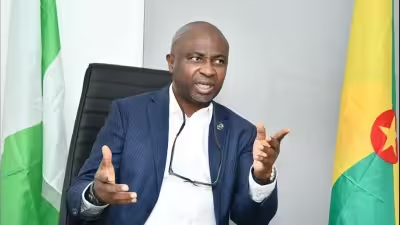





al jazeera's Tohid Asadi in Tehran said Tuesday there was no official confirmation on whether Iran would take part in second-round peace talks in Islamabad as the two-week ceasefire between the United States and Iran is set to expire on Wednesday — confirmed.
United States Seized Iranian Vessel
The United States seized an Iranian-flagged vessel near the Strait of Hormuz over the weekend, an action recorded for Sunday and cited by officials as part of escalating pressure around the negotiations — confirmed. Al Jazeera reported that the U.S. seizure angered Iranian authorities and helped push global oil prices higher — claimed by Al Jazeera. The vessel seizure is the most recent kinetic step preceding the ceasefire deadline and tightened military and economic friction tied to shipping through the Strait of Hormuz — confirmed.
Donald Trump Public Warnings
Donald Trump warned on Monday in an interview with PBS News that if the agreement ends without a deal, "lots of bombs start going off" — claimed by Donald Trump. Trump told he was "highly unlikely" to extend the ceasefire again — claimed by Donald Trump. Trump also said on Sunday that he would "knock out every single Power Plant and every Bridge in Iran if the war resumes" and warned of "problems like they’ve never seen before" in a call to the John Fredericks Show — claimed by Donald Trump. Those statements frame a U.S. leadership position that ties extension of the pause directly to concessions or a signed deal.


Pakistan Peace Talks Uncertainty
The second round of U.S.-Iran peace talks was scheduled to take place this week in Pakistan, but neither the U.S. government nor the Iranian government has confirmed attendance at the Pakistan talks — confirmed. Iranian state TV reported on Tuesday that no delegation had left for Pakistan — claimed by Iranian state TV. Mohammad Bagher Ghalibaf, Iran's Parliament Speaker and chief negotiator, posted on X that "We do not accept negotiations under the shadow of threats, and in the past two weeks, we have prepared to reveal new cards on the battlefield" — claimed by Mohammad Bagher Ghalibaf. Ghalibaf's post signals Iran's negotiating posture while under threat language from Washington.
The U.S. and Iran still face a long list of issues to settle at the table, including the Strait of Hormuz, sanctions, war reparations, ballistic missiles and Iran's regional relations — confirmed. That package of demands complicates the Pakistan talks because each item ties to policy decisions in Tehran and Washington rather than a single technical fix. Tohid Asadi, reporting from Tehran for al jazeera, highlighted that uncertainty in which Iranian officials and commentators are debating whether to show up in Islamabad — claimed by Tohid Asadi.
Whether Iran will send a delegation to Islamabad before the ceasefire expires on Wednesday is the single most urgent unanswered question in this sequence and is disputed by the U.S. and Iran: U.S. leaders link any extension to a deal, while Iran's chief negotiator says it will not negotiate under threat — disputed.