




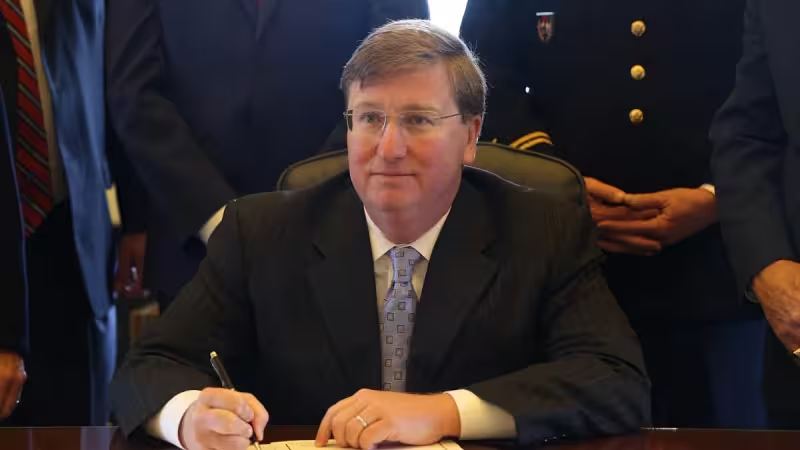
Mississippi Gov. Tate Reeves said Friday he will call lawmakers into a special session 21 days after the U.S. Supreme Court rules in Louisiana v. Callais, setting up a new round of redistricting fights in Jackson. Reeves said the move will give the Legislature the first chance to redraw district lines after the court speaks.
The governor tied his decision to the pending case over Louisiana's 2024 congressional map, which added a second majority-Black district and is being challenged as an unconstitutional racial gerrymander. He said the ruling could also affect a separate Mississippi case that has already forced the state to revisit its own district maps.
Reeves said in his announcement that federal law requires the Mississippi Legislature to get the first opportunity to draw the maps and that lawmakers have not yet had a fair chance to do so because the Callais case is still pending. He also said he is using his constitutional authority so the Legislature can act once the Supreme Court makes the new rules clear.
The Mississippi lawsuit was filed by groups including the Southern Poverty Law Center and the American Civil Liberties Union, which argue the state's current map dilutes the voting strength of Black voters in violation of federal law. The state appealed the ruling to the U.S. Fifth Circuit Court of Appeals, and that court paused the Mississippi decision until Callais is resolved.
The timing matters because the Supreme Court case could reshape how states apply Section 2 of the Voting Rights Act, with consequences far beyond Mississippi and Louisiana. During the regular session, lawmakers had already discussed drawing new maps to comply with the federal judge's order, and state Sen. Jeremy England filed a joint resolution to redraw the districts now represented by two Black state senators if the court weakens the law. That proposal died in committee, though lawmakers representing those Senate districts later suggested the Legislature could revisit the issue.
Reeves said he hopes the justices will reaffirm the principle that all Americans are created equal and that race should not be used by government to sort citizens into assumed political groups. What happens next now turns on the Supreme Court's ruling: if Callais changes the legal ground under Section 2, Mississippi lawmakers will return in a special session 21 days later and decide whether to redraw maps that could alter representation before this year's midterms.