




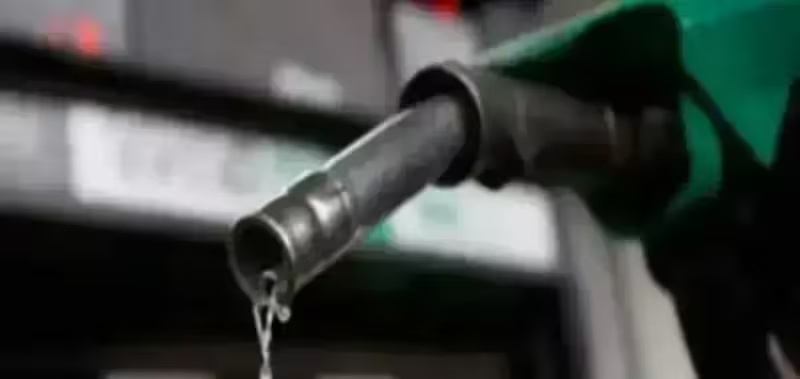
The government raised petrol and high-speed diesel prices by Rs26.77 per litre for the week starting April 25, 2026, the Petroleum Division said, bringing petrol to Rs393.35 and high-speed diesel to Rs380.19 a litre.
Prime Minister Shehbaz Sharif — who had resisted multiple proposals to raise prices as international rates climbed — is now presiding over another round of increases after a month of sharp and erratic moves in the domestic market.
The scale of the swings is stark: since the US-Israel conflict with Iran began on February 28, domestic fuel prices have seen significant fluctuations, including a steep Rs55 per litre increase on March 6. On April 2, Petroleum Minister Ali Pervaiz Malik and Finance Minister Muhammad Aurangzeb announced a sharp policy shift — increases of 43% in petrol and 55% in high-speed diesel — only for the prime minister a day later to reduce the petroleum levy by Rs80 per litre and bring petrol down to Rs378.
The volatility continued through April. On April 10 the government cut petrol by Rs12 per litre and diesel by Rs135 per litre, and in the previous review diesel prices were reduced by Rs32.12 per litre. The notification issued on April 24 that set the April 25 price change is the latest move in a string of weekly adjustments driven by disruption to global supply chains.

Government officials point to the temporary closure of the Strait of Hormuz and related market turmoil as the immediate cause of the swings. The disruptions linked to the conflict have fed short-term supply pressures that show up quickly in the weekly price-setting mechanism.
The economic reach of the decision is concentrated: petrol is widely used in private vehicles, motorcycles and rickshaws, while high-speed diesel is primarily consumed by heavy transport operators and power generators. That split means the increase will be felt at the pump by everyday motorists and by industries and utilities relying on diesel-fired transport and generation.
The tension in the policy story is plain. The prime minister had twice stepped in to blunt earlier hikes — cutting the levy by Rs80 on April 3 after the April 2 announcements, and overseeing price cuts on April 10 — yet the government has again accepted a rise this week. The oscillation exposes a gap between the immediate pressures from global markets and political choices to shield consumers.
For households and businesses, the immediate arithmetic is simple: petrol now costs Rs393.35 per litre and high-speed diesel Rs380.19 after the Rs26.77 increase. For the government, the calculation is not. The sequence — a sharp March increase, a large announced April hike, an Rs80 levy reduction, subsequent cuts, and now this restoration of higher pump rates — raises the central question of whether policy will stabilise or keep moving with international volatility.
The most consequential unanswered question is whether the administration will rely on levy adjustments and weekly price reviews to absorb further swings, or allow market-driven changes to persist as global disruptions continue. The Petroleum Division’s notification fixes prices for the week beginning April 25, 2026; what follows will depend on how fast conditions in global oil markets change and whether political will to intervene holds.