




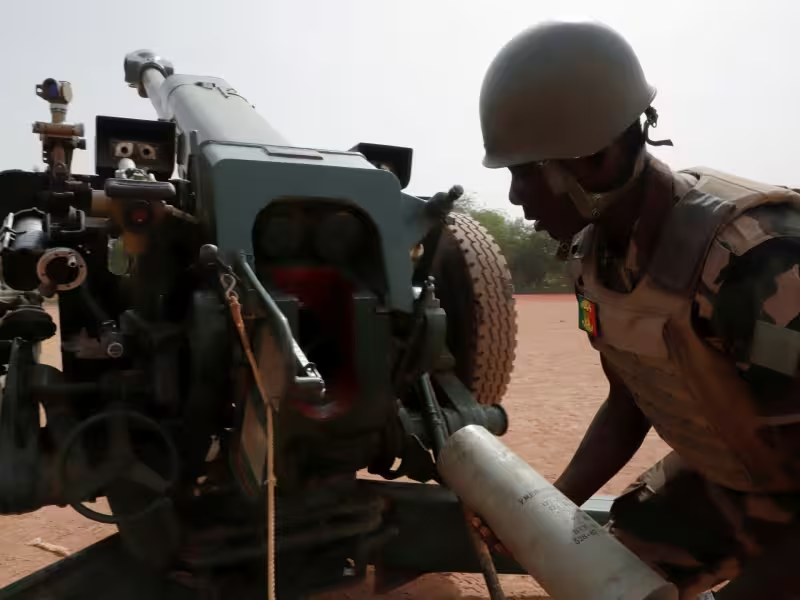
Explosions and sustained gunfire ripped through Mali on Saturday as attackers struck the capital, Bamako, and multiple northern cities in what the military described as ongoing combat.
Gen Assimi Goïta, the leader who seized power in a 2020 coup, now faces the biggest security breach in years as soldiers deployed to block roads around the Kati military base and checkpoints were set up on routes to the capital's airport.
The military said "fighting is ongoing" and that "our defence and security forces are currently engaged in repelling the attackers," adding they were confronting "terrorist groups" and that the situation was "under control." Witnesses reported explosions and gunfire around the Kati base outside Bamako, while videos circulating on social media suggested involvement by JNIM and FLA rebels.
Attacks were reported in Gao, Kidal and Sevare as well as in the capital. A resident told the that all flights into Bamako were cancelled early on Saturday and the UK's foreign office advised against all travel to Mali, saying Bamako International Airport was temporarily closed. The US Embassy urged citizens to shelter in place and avoid travel, citing explosions and gunfire around the airport and near Kati.
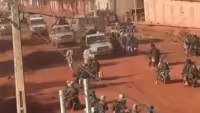
Soldiers were seen blocking roads near Kati and checkpoints were established on roads leading to the airport, where vehicles were being searched, according to reports. The visible security measures underlined the scale of the threat and the immediate disruption to daily life in Bamako.
Analyst Ulf Laessing said the incident appeared to be the "largest coordinated jihadist attack on Mali for years," a characterization that, if sustained by independent verification, would mark a sharp escalation in reach and ambition by insurgent groups.
Claims of territorial gains added to the uncertainty. Mohamed Elmaouloud Ramadane, speaking for the Front de Libération de l'Azawad, said FLA forces had "taken control of several positions in Gao and Kidal" and urged others "not to intervene." The said it had not been able to verify the FLA claims, leaving a contested picture of who holds ground where.
These attacks come against the backdrop of a long-running insurgency that began with a 2012 rebellion in the north and later saw Islamist groups overrun large areas. International forces, including UN peacekeepers and French troops, operated in Mali after 2013 but left following the 2020 coup.
The junta-led government has since hired Russian mercenaries to tackle insecurity, yet large parts of northern and eastern Mali remain outside government control. A UN-backed peace deal signed in 2015 promised decentralisation, but implementation stalled and the state’s reach has been uneven.
The immediate facts contain a sharp tension. Mali's military insists the situation is "under control" even as it acknowledges fighting is ongoing and air and ground access to the capital were disrupted. Videos alleging JNIM and FLA involvement, and assertions by the FLA that it has seized positions — which remain unverified — contradict the government’s portrait of containment.
What matters now is whether the junta can translate its security forces and hired mercenaries into effective control across the country. The scale and coordination of Saturday's strikes exposed persistent gaps in intelligence and territorial command, and they raise a clear test for Goïta's government: restore secure access to the north and protect the capital, or face further erosion of state authority.