


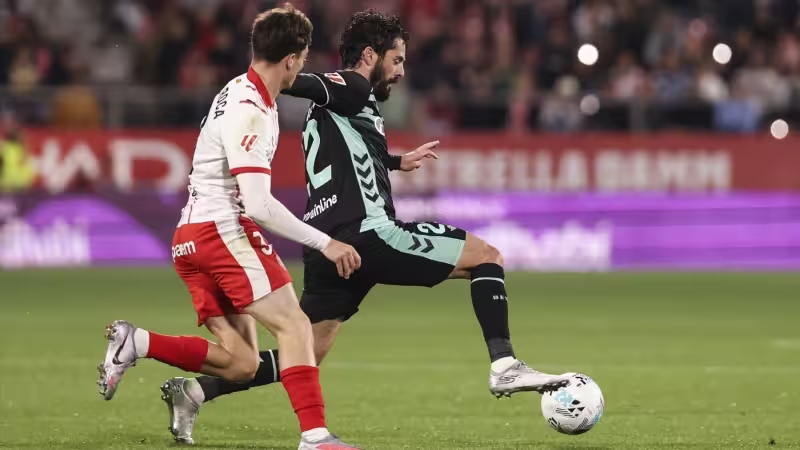
Isco Alarcón returned to the pitch for Real Betis 145 days after his injury, coming off the bench in the 74th minute against Girona on his birthday and immediately influencing the game.
Alarcón played only a short spell — described as 15 minutes in one reference and 16 minutes in another — but he was involved in the move for Betis's third goal, sending a long pass to Abde that finished with a strike by Riquelme.
The figures underline why the comeback mattered: 145 days out, a late 74th-minute introduction and participation in the decisive third goal of the match. For a player who has not had regular minutes in almost a year, those numbers are both small and significant.
After the game, Alarcón spoke plainly about the difficulty of the recovery and the emotional weight of the return: "Me ha costado un poco después de casi un año en blanco. Llevo cuatro o cinco entrenamientos completos solo, pero ya el simple hecho de poder entrenar y jugar con el Betis para mí es un regalo." He added that doctors and staff had warned him they were not even sure he could come back: "Me dijeron que no sabían si podía volver a jugar al fútbol." He closed his remarks by underlining how he now views every appearance: "A partir de ahora, cada partido y cada entrenamiento para mí es un regalo."


That sequence — long layoff, a handful of solo sessions, and an emotional return that immediately contributed to a goal — is the essential context. Betis are in the final stretch of the season and are pushing to secure European qualification; Alarcón has been presented throughout as the club's leader and captain, and his availability, even in short bursts, changes the calculus for Manuel Pellegrini and the squad.
The tension in the story is simple and practical. Alarcón's minutes are a risk-management problem. He has only completed "four or five" full training sessions on his own, and he told reporters the process cost him a lot after nearly a year out. Pellegrini has signaled he will manage Isco's minutes carefully to reduce the risk of a relapse, a cautious approach that could limit how much the team can rely on him in the run-in for European places.
That creates a squeeze: Betis need their captain's creativity and leadership as they chase continental football, but the same player must be shielded to prevent another setback. The minute-count discrepancy — 15 in one mention, 16 in another — is small but emblematic: the club, the player and the coaching staff are measuring every second of his return.
On the field, Alarcón's contribution was unmistakable. His long pass to Abde sparked the sequence that became the third goal, and even a brief appearance changed the rhythm of Betis's attack. Off the field, his words frame what comes next: a player who has been told his career might be in doubt, who has worked through a handful of solo sessions, and who now treats each training and match as a gift.
The clear conclusion is that Isco's return matters less as an immediate performance solution and more as a managed boost for the closing weeks. Pellegrini will almost certainly preserve him in short, controlled spells; Betis gain a creative option and a morale lift, but they cannot build a long-term plan around a player whose comeback is still being protected. For Alarcón, the day ended as he described it — the chance to play again, and to do so on his birthday, felt like a gift: "A partir de ahora, cada partido y cada entrenamiento para mí es un regalo."


