





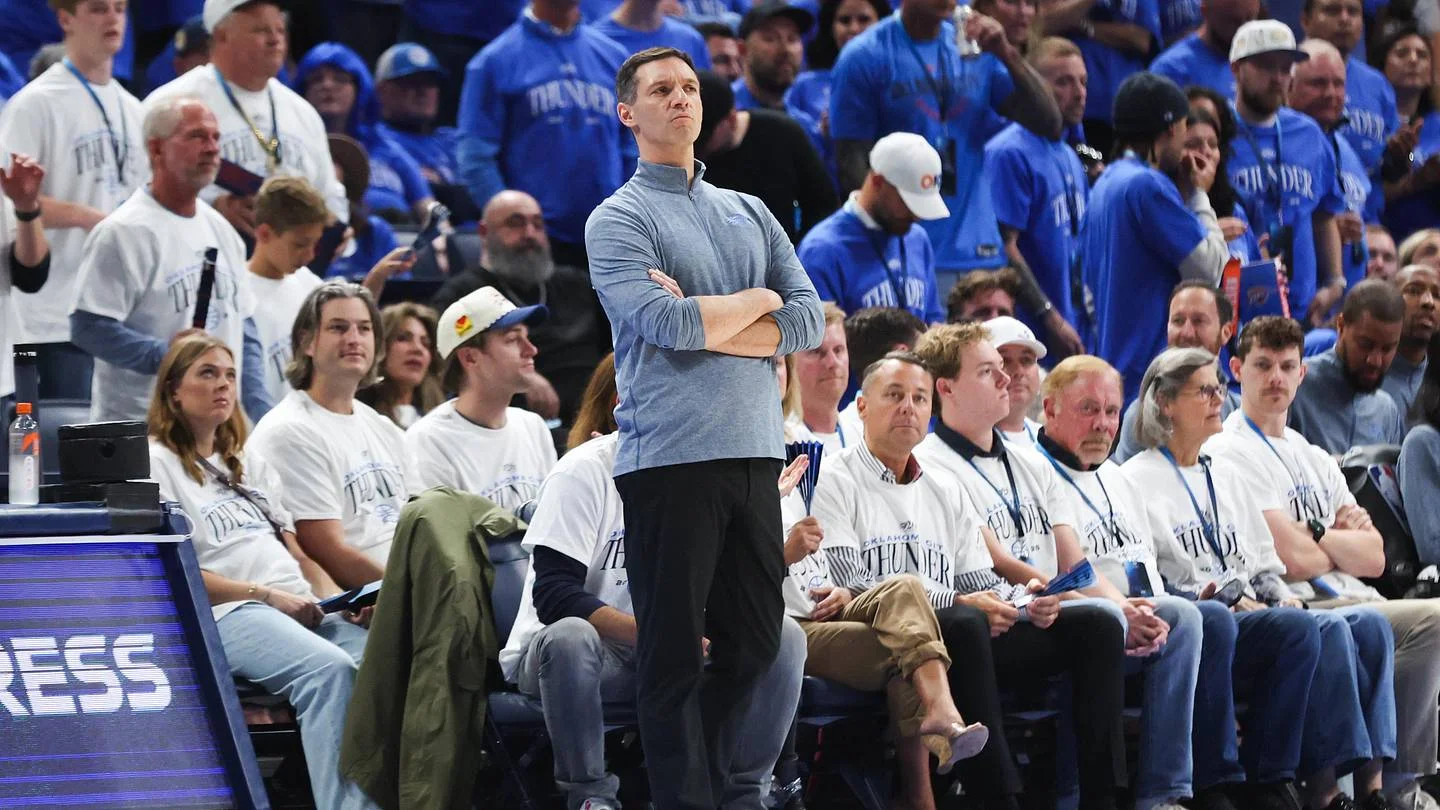
Jalen Williams watched from the bench Wednesday as the Oklahoma City Thunder opened Game 3 of the Western Conference Finals at the Paycom Center without him after his left hamstring tightened in Game 2.
Williams, who played only in the first quarter of Game 2 when he re‑aggravated the hamstring, has been listed day‑to‑day for the rest of the series, and the absence altered Oklahoma City’s plan for the road game. Coach Mark Daigneault replaced his usual starting five and inserted Ajay Mitchell into the lineup for Game 3.
The timing of the injury mattered as much as the injury itself. The Thunder had won Game 2 to knot the series at one game each, and they went into Game 3 intent on splitting the road trip so they could return to Bricktown for a pivotal Game 5 with the series still level. Without Williams available, Daigneault turned to bench depth and shuffled roles to shore up minutes at wing and on the perimeter.
Ajay Mitchell was active and in the starting lineup for the contest, a direct result of the adjustment. Dylan Harper, who had started the first two games of the series, was a question mark coming into Game 3 because of an adductor issue but was upgraded to available and moved to the bench for the matchup. Those moves reshaped rotations in real time, forcing younger players to absorb more responsibility on both ends.



Across the floor, the Spurs welcomed a significant change to their own availability: De'Aaron Fox was set to make his Western Conference Finals debut in Game 3 after missing the first two games with a high ankle sprain. His return altered defensive matchups and added another variable for Oklahoma City to plan around when Williams was unavailable.
The sequence — Williams’ hamstring flare, the Thunder’s Game 2 victory to level the series, and the lineup adjustments for Game 3 — created immediate pressure on Oklahoma City’s depth. Daigneault’s decision to change his usual five underscored the thin margin teams are operating with in the conference finals, where a single injury can force strategic pivots on the fly.
Tension in the series now runs through the timetable of Williams’ recovery. He is day‑to‑day for the rest of the series, which leaves the Thunder unsure whether they will have their wing for a home Game 5. Oklahoma City’s stated goal was to split on the road and return to Bricktown for Game 5 tied at two games apiece; missing Williams complicates that plan and magnifies the importance of how Daigneault manages minutes and matchups in the short term.
Williams’ status is the hinge on which the next stretch will swing: his availability will determine whether the Thunder can reclaim their preferred starting configuration and whether they can realistically force the series back to Oklahoma City with momentum. For now, Mitchell’s start and Harper’s move to the bench are temporary answers; the more consequential one — whether Williams can rejoin the rotation — remains unresolved and decisive for what comes next.