




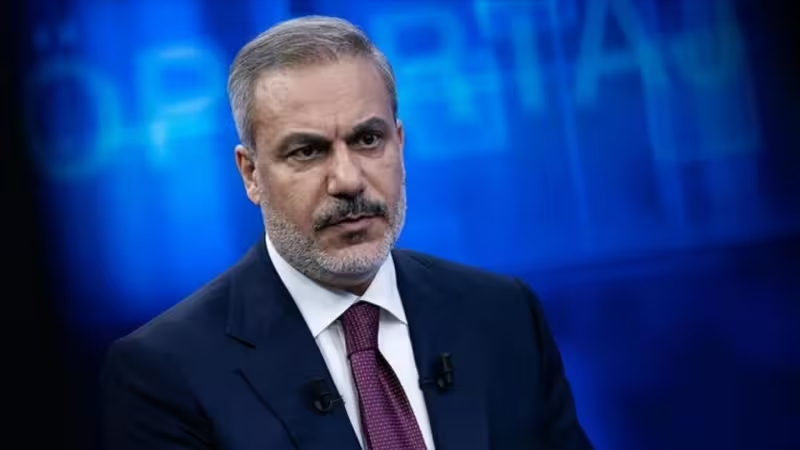
On May 5, 2026 a news list carried the headline "Beşiktaş-Konyaspor maçından notlar," but the item beneath it was not match coverage: it reported Foreign Minister Hakan Fidan's phone call with Dutch MEP Tom Berendsen discussing Turkey–Netherlands relations and preparations for the upcoming NATO summit.
The mismatch landed as a simple glitch on a list of stories, but it mattered because the text that followed concerned diplomacy at a sensitive moment. Hakan Fidan and Tom Berendsen spoke about bilateral ties and the logistics and posture ahead of the NATO Zirvesi now on official calendars — a topic readers and officials monitor closely as summit delegations finalize positions.
For anyone expecting game notes on besiktas vs konyaspor, the swap was jarring. Sports fans scanning the feed would have found diplomatic reporting instead of player lineups or match analysis; diplomats and journalists searching for details on the phone call found those details listed under an unrelated headline. That cross-labeling makes it harder to track which items are circulating in public conversations about the summit.



Context matters here: the phone call itself fits a pattern of last-minute consultations among NATO partners in the run-up to formal meetings. The source list dated May 5 referenced the Fidan–Berendsen exchange and explicitly linked it to preparations for the forthcoming NATO summit, meaning the matter is current, not historical. Accurate labeling and placement of diplomatic stories shape how quickly officials can respond to developments and how readers perceive priorities ahead of a major alliance meeting.
The immediate tension is procedural and editorial. A sports headline next to a foreign-ministry dispatch suggests a content-management or aggregation error; it could also reflect a rapid reshuffle of copy where a headline failed to update. Either way, the error blurs the line between public information streams at a moment when clarity matters. If readers, analysts or Turkish and Dutch officials miss that a diplomatic exchange has been reported because of mislabeling, the consequences are small on their own but accumulate across the information environment as the summit approaches.
What happens next is straightforward and consequential: the news outlet responsible will need to correct or clarify the listing, and those tracking NATO summit preparations will watch for additional diplomatic exchanges between Turkey and the Netherlands. The single unresolved question that follows from this misplacement is this — was the sports headline a benign technical slip, or did an editorial breakdown obscure a diplomatic update that should have been more visible as leaders and envoys prepare for the summit?
The answer will shape whether readers treat this as an isolated oddity or as a sign that information about high-stakes diplomacy requires closer verification before it is circulated. Until the outlet issues a correction and the foreign ministry or European partners provide any further detail on the call, the mix of a Beşiktaş–Konyaspor lead and a NATO-focused story will remain a small but telling example of how content flow can influence public understanding on the eve of an important alliance meeting.