




Mihály Kolodko installed a tiny bronze statue of Yoda on a railing in the underpass at Szent Gellért Square metro station in August 2024, and the little figure has become a focal point for Budapest’s Star Wars observances as the city marks Star Wars Day on 4 May.
The timing matters: 4 May is the date fans celebrate each year, a tradition born from the pun that the phrase "May the Force be with you" sounds like "May the Fourth be with you." The saying first appeared in print in 1979, and since 2011 the day has evolved into an international celebration. In Budapest the holiday has found an unlikely emblem—Kolodko’s meditative Yoda, installed quietly but visible to the thousands who pass through the station every day.
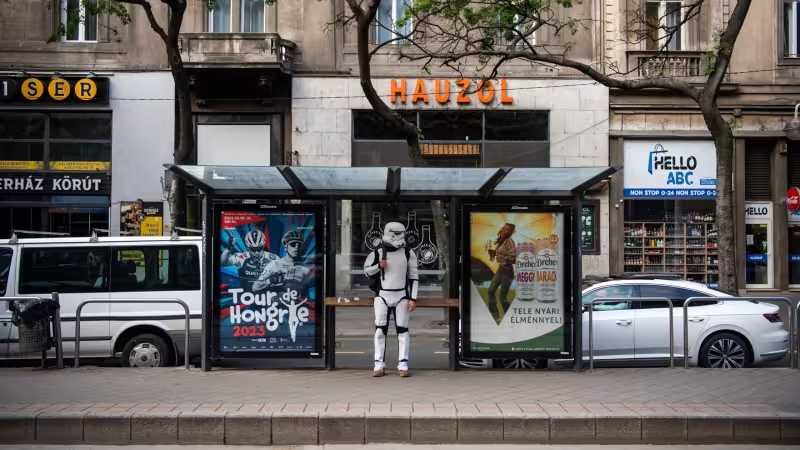
The statue is small enough to be missed at a glance, but it carries weight because the city’s transport system and fandom already intersect here. Budapest Transport Centre commented on the installation by referencing Luke Skywalker and the Dagobah system, signaling an official nod to the pop-culture reference. In previous years fans dressed as stormtroopers have appeared across the metro network, and Line 3 stations have been compared to the corridors of an Imperial Star Destroyer, making the network a ready stage for costume-led celebrations.
Kolodko’s Yoda is in his classic meditative pose, a deliberate choice that fits the sculptor’s practice of placing playful figures around the city. The piece’s modest scale and placement—perched on a railing in an underpass—echo that practice: small public artworks that reward close attention rather than dominate a plaza.
The context matters now more than in past years because Budapest’s local nods to Star Wars sit alongside a global media moment. The Mandalorian and Grogu, directed by Jon Favreau and starring Pedro Pascal, is set to premiere in Hungary on 21 May 2026, arriving one day ahead of its global release. That juxtaposition—an intimate piece of street sculpture and a blockbuster franchise premiere—frames Budapest as a place where everyday transit and international fandom meet.
The tension is plain: the Yoda figure is a quiet, grassroots gesture of fandom and public art, yet it exists within a transit system that has already been an intermittent theatre for costumed fans. The Budapest Transport Centre’s choice to reference Luke Skywalker and Dagobah blurs the line between official recognition and fan activity. At the same time, the upcoming premiere of The Mandalorian and Grogu turns the city into a potential promotional waypoint for a global franchise, raising the question of whether such small, local tributes will be absorbed into larger commercial events or remain what they are—a series of small surprises for commuters.
For commuters and tourists the effect is immediate. A tiny bronze Yoda on a railing transforms a routine passage into a moment of recognition, especially on 4 May, when the city’s attachment to the franchise is most visible. The statue’s presence also points to a wider cultural pattern: in Budapest, public spaces and the transit system have become unexpected sites for Star Wars references and fan gatherings, connecting a local sculptor’s whim to a narrative that began decades ago when the phrase now tied to the holiday first appeared in print.
The consequence is straightforward. As Budapest moves from Star Wars Day toward the May 21 premiere, expect the city’s low-key installations and past occurrences of costumed commuters to be read anew. Kolodko’s Yoda will remain small and still, a quiet counterpart to the louder events on the way, and it may determine how Budapest’s transit spaces are used by fans in the days leading up to Hungary’s early screening.