




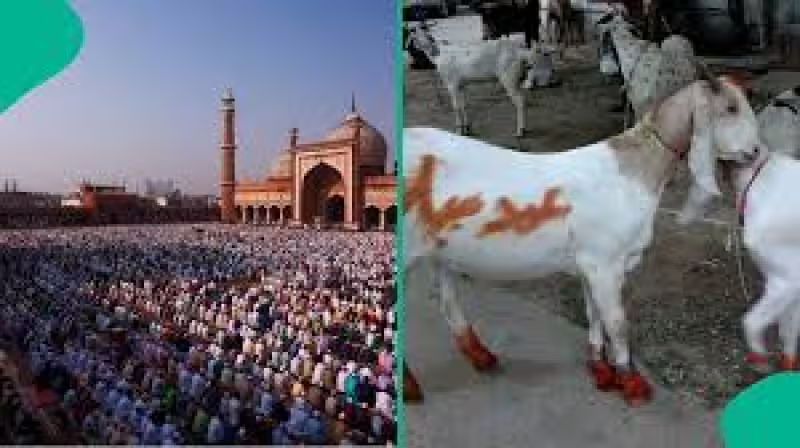
The Ruet-e-Hilal Committee is scheduled to meet on 17 May to determine the start of Zul-Hijjah, and Karachi authorities have approved multiple cattle market sites as the city prepares for Eidul Azha 2026.
If the moon is sighted at the committee meeting on 17 May, Eid holidays in Pakistan could fall between 27 and 29 May — a break authorities note could stretch through 31 May if the weekend is included. That timing contrasts with the alternative: if Zul-Hijjah completes 30 days, Eid is expected on 28 and 29 May, a shorter configuration that would still allow for a four-day holiday when the weekend is factored in.
The scale of the calendar decision is immediate and measurable. Officials in Karachi gave the Karachi Metropolitan Corporation permission to establish cattle markets at five designated locations inside the city: Sunday Bazar in North Karachi, the KMC Grounds, Safari Park, and Gulistan-e-Johar Blocks 5 and 6. Separate arrangements will also see markets on vacant plots in Lyari’s Bakra Piri area and in Korangi.
The KMC had sought approval for a total of 11 livestock markets across Karachi. The municipal request and the city’s eventual approvals are central to how buyers and sellers will transact in the days before Eid: more markets would disperse crowds and reduce travel; fewer locations concentrate activity. The published approvals — five named sites plus two additional market areas — are the concrete actions taken now, ahead of the final calendar decision from the Ruet-e-Hilal Committee.
Context matters: the final Eid-ul-Adha 2026 holiday schedule hinges on the sighting of the Zul-Hijjah moon, which is why the 17 May meeting is decisive for calendars, employers and public planning. Karachi’s move to designate markets is part of a predictable municipal response — providing organized facilities for buyers and sellers in advance of the festival.
The friction is plain. The KMC’s original request for 11 markets has not been matched by an equal number of formally designated locations, and the timing of the Ruet-e-Hilal Committee’s decision leaves less room for last-minute adjustments. If the moon is sighted on 17 May and Eid falls as early as 27 May, municipalities will have only days to finalize logistics at the approved sites and at the vacant plots in Lyari and Korangi. The gap between what the KMC asked for and what was approved raises immediate questions about whether the authorized markets will absorb demand and how crowd control and health measures will be enforced.
For the public, the stakes are straightforward: the dates set by the committee determine when families observe Eid and how long the national break lasts, while the number and location of cattle markets determine how and where sacrificial animals are bought. If the committee confirms the moon sighting on 17 May, the prospect of a holiday window from 27 to 31 May will shape travel and market activity for millions; if Zul-Hijjah completes 30 days, the 28–29 May timetable will compress that activity into a shorter span.
The single most consequential unanswered question now is whether authorities will approve additional livestock markets beyond the five designated sites and the vacant plots in Lyari and Korangi before Eid — and if not, how the city will manage the influx of buyers and sellers in the days that follow the Ruet-e-Hilal Committee's 17 May ruling.