


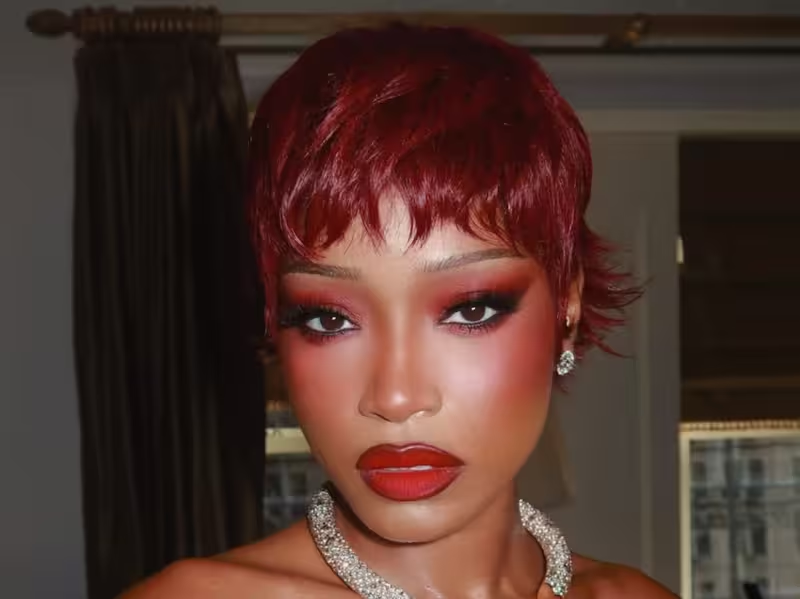
Tyla walked the red carpet at the 2026 Met Gala on May 04, 2026, wearing a custom Valentino by Alessandro Michele: delicate crystal draping over a fluid blue satin skirt, finished with silver peacock feathers and an explicit nod to the artist Erté.
The South African Grammy-winning artist’s ensemble registered immediately as one of the evening’s signature looks — not only for its craftsmanship but for the way it married old-school costume references with contemporary pop presence. Photographs and commentary from the event placed Tyla alongside other African fashion icons, saying she, Skepta and Anok Yai dominated the night.
The specifics of the outfit carried the weight. Alessandro Michele’s Valentino combined hand-applied crystal strands that fell like a veil, a sweeping blue satin skirt cut to move, and metallic peacock accents that caught the light. The result read as both couture and costume, a deliberate fit for a gala themed around theatrical dress.
That theme — the 2026 Met Gala’s “Costume Art” — set the frame for every arrival. The event took place at the Metropolitan Museum of Art in New York City, where the museum’s galleries and the carpeted steps outside became the gallery for fashion as much as the museum became the stage for costume history.
There is a tidy tension in Tyla’s look: its Erté inspiration evokes classic, European costume illustration while the wearer is firmly of a younger, African pop generation. The contrast matters because it highlights how references once read as archival are now being reclaimed and reworked by artists whose international profiles shift what costume can signify in 2026.
That tension played out across the evening. Tyla’s Grammy-winning status and international profile gave the dress context beyond the visual — it was a statement about who gets to embody costume art on one of fashion’s most scrutinized nights. Coverage that grouped Tyla with Skepta and Anok Yai positioned African stars at the center of the carpet, rather than at its margins.
For designers and muse-watchers, the collaboration with Alessandro Michele offers another data point in Valentino’s relationship with high-profile performers; for Tyla, the look translated a musical career into a moment of visible, curated persona that critics and audiences could parse at a glance. The blue satin and crystal motifs made the reference to Erté explicit, but the peacock feathers read as a contemporary flourish.
What comes next is already visible in how these moments travel: images from May 04, 2026 will circulate across fashion pages and social feeds, and the conversation about who dominated the Met Gala’s “Costume Art” theme will keep the names Tyla, Skepta and Anok Yai in the center of it. The clear answer to whether Tyla’s look mattered at the Met is yes — her Erté-inspired Valentino did more than reference costume history; it helped place her among the evening’s defining figures and underscored the larger narrative that African artists were among the night’s dominant presences.