



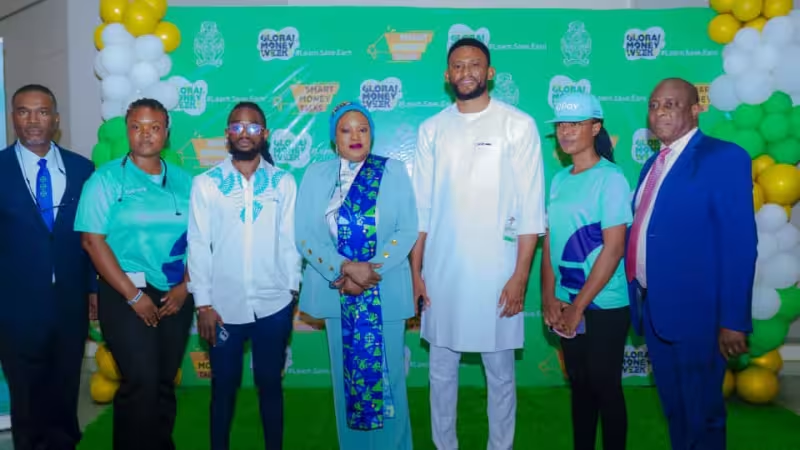
Aisha Isa-Olatinwo opened the Financial Literacy Fair and Exhibition at the Central Bank of Nigeria headquarters in Abuja on Tuesday, 28 April 2026, as OPay partnered with the bank during Global Money Week.
The event, themed Smart Money Talks, drew students from secondary schools across the Federal Capital Territory and put them in front of real financial choices: hands-on sessions on budgeting and savings, exposure to products on display and direct interaction with OPay’s interactive booth.
Among the participating schools were Doveland International School, Living Fountain International School, Government Day Secondary School, Wuse, and Government Science School, Maitama — four named institutions that sent pupils to the CBN-hosted fair.
Isa-Olatinwo framed the day bluntly: "In today’s rapidly evolving financial landscape, financial literacy is no longer optional but essential for individuals, families, and the broader economy." She told students how talking about money can change behavior: "When we talk about money, we break down misconceptions, build confidence, and prepare ourselves for a more secure financial future."
Nelson Amuwa, speaking on the fair's aim, captured the tone of the programme in two words — "Smart Money Talks" — and added that "Encouraging open conversations about money is key to building a secure financial future for our youth." The sessions not only demonstrated simple saving techniques but also gave participants exposure to financial products and opportunities they might not meet in the classroom.
Representatives of OPay said the partnership with the CBN supported regulators’ consumer-protection priorities. Chukwudinma Okafor said, "Our partnership with the CBN on Global Money Week reaffirms our strong alignment with regulatory priorities around consumer protection and financial literacy. At OPay, compliance goes beyond regulation; it is about building trust and ensuring that young people are equipped to engage safely in the financial system." Paul Iwunwa framed the private-sector rationale plainly: "OPay sees financial literacy as the foundation of true financial inclusion. By engaging students at this critical stage, we are not only helping to shape better money habits but also contributing to a more economically resilient future for Nigeria."
The fair’s format mixed short talks with practical demonstrations so that students practiced simple record-keeping, made mock savings plans and navigated basic product features on tablets at OPay’s booth. Organizers said global money week is a worldwide awareness initiative designed to equip young people with the knowledge and skills needed to make sound financial decisions.
That emphasis on sustained learning is reflected in the CBN’s parallel work. The bank has introduced the Bank Consumer Education Series and the Sabi Money e-learning platform, initiatives the CBN says are part of a broader strategy to instil responsible financial habits among young people.
Officials said the outreach will not stop at school gates. The CBN said this year’s activities were tailored to instil responsible financial habits and would extend beyond students to include parents, traders and grassroots communities nationwide — a push that shifts the fair from a single-day demonstration to one element in a larger campaign.
The tension in Abuja was visible: a lively, practical fair that can spark curiosity and build confidence, set against the longer task of turning a single-day experience into lasting behaviour change. Private partners like OPay stress alignment with regulation and trust-building; the CBN is building tools and series to follow up. Together, their actions make clear which side of the gap they intend to close.
If the aim is deeper financial inclusion, the most consequential fact is simple and immediate: for the CBN and OPay, early engagement matters more than ever — and they have pledged the platforms to keep at it. That commitment, not the day itself, is what will determine whether the money lessons stick.