


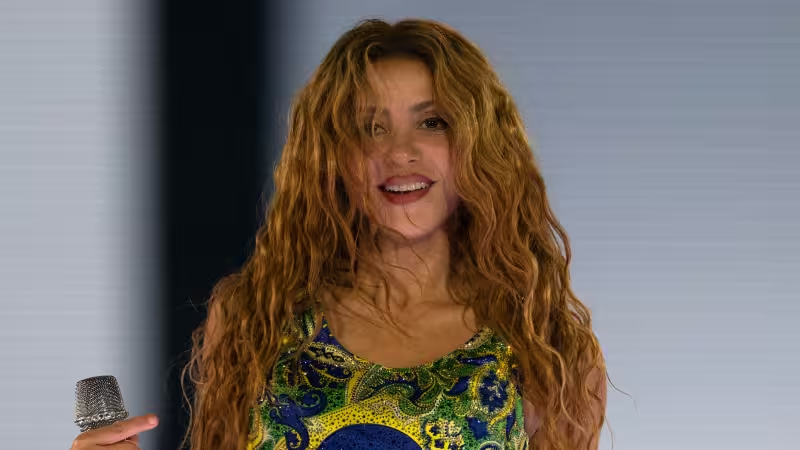
Shakira released a short clip this week of the official song for the 2026 World Cup — a track called “Dai Dai” recorded with Nigerian artist Burna Boy — and said the full song will be released across major streaming platforms on May 14.
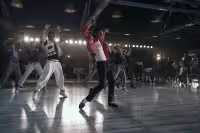
The preview appeared as a brief video on Shakira’s social media in which she wears a yellow shirt and blue shorts and poses with several soccer balls alongside a group of female dancers; Billboard reported the one-minute clip and music video will premiere on May 14 and described the sound as reggaetón-tinged Afrobeats. Shakira said the music video was filmed at the Maracanã Stadium in Rio de Janeiro and included footage that reads “We are ready.”
The stakes are large: Shakira is already closely tied to World Cup music. Goal.com reports “Waka Waka (This Time for Africa),” her 2010 anthem, has more than 4 billion views on YouTube and exceeded 15 million digital sales. Billboard data show that song peaked at No. 2 on multiple Latin charts and spent 42 weeks at No. 1 on the Latin Digital Song Sales chart — metrics that turned a tournament song into a global pop fixture.
“Dai Dai” is billed as another official World Cup track for the tournament that will be staged across the United States, Mexico and Canada in 2026, and the pairing with Burna Boy extends Shakira’s history with the event: she performed a special version of “Hips Don’t Lie” at the 2006 final in Berlin, recorded “Waka Waka” for the 2010 South Africa World Cup and performed “La La La” at the 2014 Brazil World Cup.
There is immediate friction between the clip’s imagery and the tournament’s geography. The video’s shooting location — the iconic Maracanã in Rio — and the on-screen phrase “We are ready” underscore a global, celebratory message, but they also raise the oddity of staging a centerpiece video for a North American-hosted tournament inside a South American stadium. The choice is striking because it ties the 2026 campaign visually to a different World Cup era and a city that will not host next summer’s matches.



Another tension comes from sound and stake. Billboard’s description of the track as reggaetón-tinged Afrobeats signals a stylistic shift from the per-song pop anthems that previously defined Shakira’s World Cup catalog. That blend could expand the song’s reach across regions and playlists, but it also asks whether listeners will connect the track to the specific cultures and fans of the three host nations.
Shakira’s announcement left no ambiguity about timing: she said the track is scheduled for full release across all major streaming platforms on May 14. Billboard’s account that a one-minute clip and the music video will premiere the same day suggests a coordinated rollout designed to maximize streaming and visual exposure on release day.
For the tournament, an official song that instantly racks up streams, views and conversation matters: Shakira’s earlier World Cup songs turned into enduring pop moments, and team executives and broadcasters lean on that kind of cultural lift to amplify the event. The social clip, the Maracanã imagery and Billboard’s genre note set expectations for a global push aimed at radio, playlists and the stadiums where millions will attend and watch.
There is still one clear fact left to the reader: Shakira and Burna Boy have previewed the official 2026 World Cup song and promised the full release on May 14 — and given Shakira’s history of turning World Cup anthems into global hits, the music industry and fans alike should treat that date as the moment the 2026 fifa world cup soundtrack officially lands.
For related coverage of tournament administration and team slots, see