


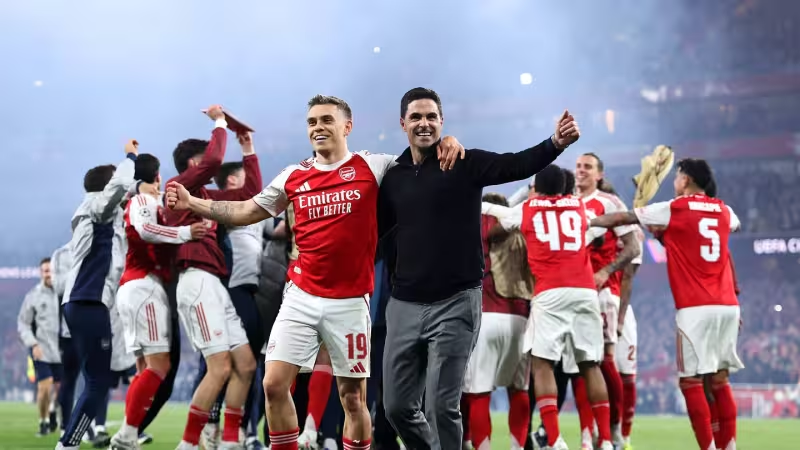
Leandro Trossard kept his place in Mikel Arteta's unchanged Arsenal lineup against Atletico Madrid after starting against Fulham last weekend and producing a string of eye-catching attacking numbers.
On the ball at Craven Cottage, Trossard completed all six of his attempted dribbles, had four shots, created two big chances, produced two key passes and won eight duels — the kind of output that explains why Arteta left him in the side for the Madrid tie and why selection remains contested on the left wing.
The underlying case for keeping Trossard is built on a simple set of figures: between August and New Year's Eve he scored seven goals and registered six assists, a return that made him one of Arsenal's most dangerous attackers in the first half of the campaign.
But the balance in that record arrives with an obvious caveat. Since the 4-1 demolition of Aston Villa just after Christmas, Trossard has not scored a single goal. That drought sits beside the creative productivity documented against Fulham and the match-by-match trust shown by Arteta, who named an unchanged lineup and kept Trossard in place against Atletico Madrid.
The selection choices matter because the left wing has been a spot very much up for grabs at Arsenal all season. Gabriel Martinelli, nominally an option in that role, has managed just one Premier League goal this season. Eberechi Eze, another player capable of filling the position, was not used in that role for months after his lapse on 6 December allowed Matty Cash to open the scoring at Villa Park — a moment that altered how the coaching staff has thought about deploying him since.



That combination of a positional vacancy and Trossard's mixed recent ledger creates tension inside the squad. The manager appears to be prioritising the wider package of what Trossard offers in possession — dribbling success, chance creation and physical engagement in duels — over a short-term requirement for goals. Against Fulham those traits translated into four shots and two big chances, yet the missing goal remains a glaring omission given how prolific he had been before New Year's Eve.
The context sharpens the stakes. Arsenal are four games away from what the club regard as the greatest season in their history. With that finish line in sight, every selection and every run of form takes on elevated importance. An attacker who can both provoke chances and finish them would remove headaches; an attacker who only does one of those things keeps them very much alive.
The tension is not only tactical. It is a record-versus-run problem: Trossard showed exceptional productivity between August and the turn of the year, then stopped scoring after the 4-1 Villa victory. Arteta has responded by retaining him anyway, and the performance metrics from the Fulham match — perfect dribble completion, multiple key passes, big chances created — are the practical evidence the manager is using to justify that trust.
Against Atletico Madrid, Trossard kept his place and impressed again, reinforcing the argument that he remains integral to how Arsenal want to attack. But impressive performances that end without goals do not erase the underlying fact that the team could use an end to his drought if they are to complete the run-in with maximum momentum.
The most consequential unanswered question now is whether Leandro Trossard can translate his recent creativity back into goals over the four decisive matches that will determine Arsenal's place in history. Everything Arteta has done this month suggests he believes the answer might be yes, but the season's defining moments will turn on whether Trossard can end the drought when it matters most.