


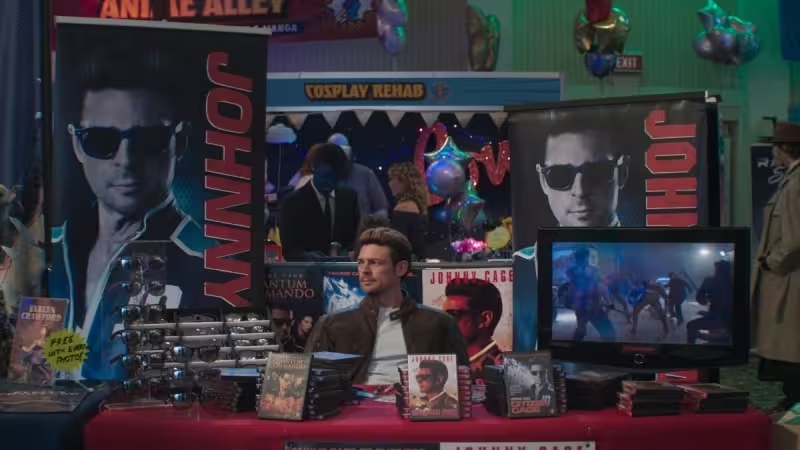
Mortal Kombat II hit theaters this weekend, and Karl Urban’s Johnny Cage — written as a washed-up ’90s action star — is at the center of the sequel’s attempt to raise the series’ live-action bar while Shao Kahn looms as a malevolent conqueror threatening Earthrealm.
Simon McQuoid directed the 116-minute film from a screenplay by Jeremy Slater, mounting a direct follow-up that leans into spectacle and an established fighting-movie DNA. Mortal Kombat II follows Urban’s Cage into a confrontation with Shao Kahn, and industry observers have already weighed in: Awards Radar called the sequel an upgrade over the film that preceded it and said Mortal Kombat II “succeeds more than it fails,” adding there is “fun to be had with this deeply silly, overly violent, and paper thin action flick.”
The Mortal Kombat franchise itself has been a fixture of popular culture since it began as a video game in 1992 and has been adapted for the screen more than once: a 1995 Mortal Kombat film, 1997’s Mortal Kombat: Annihilation, and a 2021 reboot also titled Mortal Kombat. Awards Radar noted that the 2021 film arrived five years earlier and was reviewed by the outlet as “not bad,” framing the new entry as part of an uneven but continuing effort to translate the games into movies.
Context matters here. Coverage of the rollout emphasized how the property has been handled before. Mashable observed that several attempts have been made to turn Mortal Kombat into a good live-action movie and concluded the efforts have not yet succeeded, asking wryly, “How many times do we have to go through this?” Mashable also reported that early promotional material from Warner Bros. spotlighted Johnny Cage and that Cole Young—central to the 2021 story—was relegated to a tertiary role in the sequel.
That contrast — a studio pushing a familiar, marketable figure and critics divided over whether the new film truly elevates the series — is the film’s main tension. On one side is the franchise’s long popularity and a production that double-downs on the franchise’s violent spectacle; on the other is the cautious reception that sees incremental improvement rather than wholesale reinvention. Awards Radar placed Mortal Kombat II in a larger trend that has seen video game movies only recently find more reliable footing, citing Sonic the Hedgehog as an example of that modest renaissance.
For viewers who have followed Mortal Kombat since its 1992 origin, the sequel’s arrival is both predictable and instructive: predictable because the series keeps returning to the same set pieces and characters, instructive because critics now measure those returns against a narrower standard. The director, Simon McQuoid, and screenwriter, Jeremy Slater, deliver a 116-minute action piece that leans into the franchise’s strengths — recognizable characters, staged combat, and a clear villain in Shao Kahn — while leaving some narrative depth behind.
So does Mortal Kombat II finally deliver a successful live-action Mortal Kombat? The clearest answer available in the first wave of commentary is yes, but with limits: Awards Radar judges it an upgrade and says it “succeeds more than it fails,” meaning the sequel improves on its immediate predecessor without escaping the franchise’s tendency toward shallow spectacle. Mashable’s question — “How many times do we have to go through this?” — remains a useful reminder that a fan base tired of repeats will demand more than upgraded effects; they will want a demonstrable creative leap that, so far, reviewers say is only partial.