


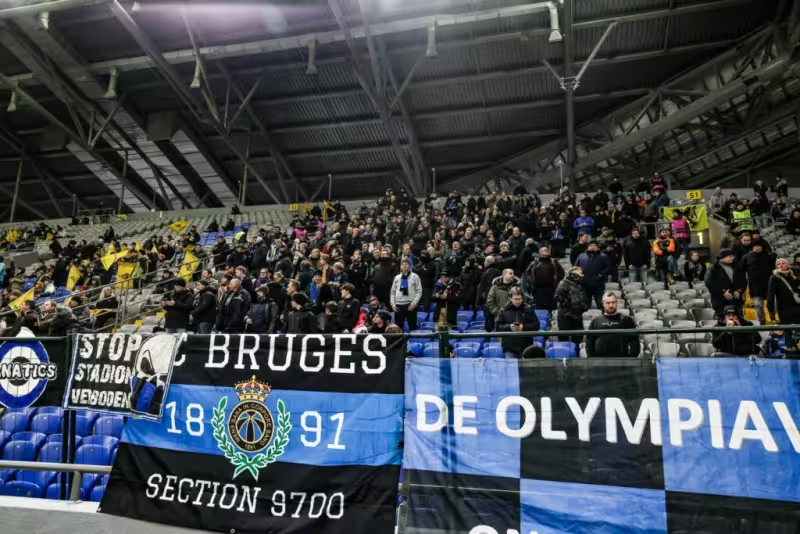
The Brussels public prosecutor launched a judicial inquiry after antisemitic chants were reportedly sung by some Club Brugge supporters during a match against Anderlecht last Sunday, and on Monday afternoon summoned Bart Verhaeghe for questioning.
The prosecutor has treated the chants as violations of the law and opened an investigation into incitement to hatred or violence that targets the Club Brugge organisation and unidentified individuals, aiming to identify those involved and bring them to justice. Authorities described the incident as serious and said the chants were sung with a shocking normalisation that warrants firm action. The prosecutor said, "These antisemitic chants have no place in our society." The prosecutor added, "They undermine the values of sport and those upheld by the majority of supporters."
Prosecutors say the immediate aim of the inquiry is to establish who took part in the chants and whether the conduct amounts to criminal incitement. The investigation will examine the supporters' section where the chants were heard during the Anderlecht match and will seek evidence that ties individuals — and possibly organisational responsibility — to the events at the stadium.
Officials framed the case as more than isolated words. By opening a judicial inquiry and summoning Verhaeghe for questioning the day after the match, authorities signalled they regard the episode as one warranting rapid and formal scrutiny. The prosecutor’s decision to name both the Club Brugge organisation and unnamed persons in the investigation underscores that investigators are looking beyond individual actions to the environment that allowed the chants to occur.



Contextually, the inquiry concerns alleged incitement to hatred or violence linked specifically to chants heard in the section where Club Brugge supporters were seated. The prosecutor has categorised those actions as violations of the law and said the investigation aims to identify perpetrators and bring them to justice. That framing places the incident squarely within criminal, not just sporting, accountability.
The tension in the case is immediate and structural. The probe targets both an organisation and elusive individuals, creating a practical challenge for investigators: proving who was responsible for singing the chants and whether the club itself can be held to account for what happened in its supporters' area. That gap — between identifiable people and an organisation that oversees supporter areas — is precisely where the inquiry will have to produce answers.
For Club Brugge and for the broader football community, the stakes are clear. Authorities have described the incident as serious and demanded firm action in response to what they called a shocking normalisation of antisemitic language. The prosecutor’s blunt declaration that "These antisemitic chants have no place in our society" and that "They undermine the values of sport and those upheld by the majority of supporters" frames the next steps as legal as much as reputational: the inquiry could lead to charges against individuals, sanctions for the club, or both, depending on what evidence investigators uncover.
The immediate next act in the unfolding story is procedural: investigators will continue collecting evidence from the match, and the prosecutor will question witnesses and those summoned — starting with Bart Verhaeghe, who was brought in on Monday afternoon. The single most consequential unanswered question now is whether the judicial inquiry will establish organisational responsibility for the chants and translate that finding into prosecutions or penalties that change how supporter conduct is policed at games.