



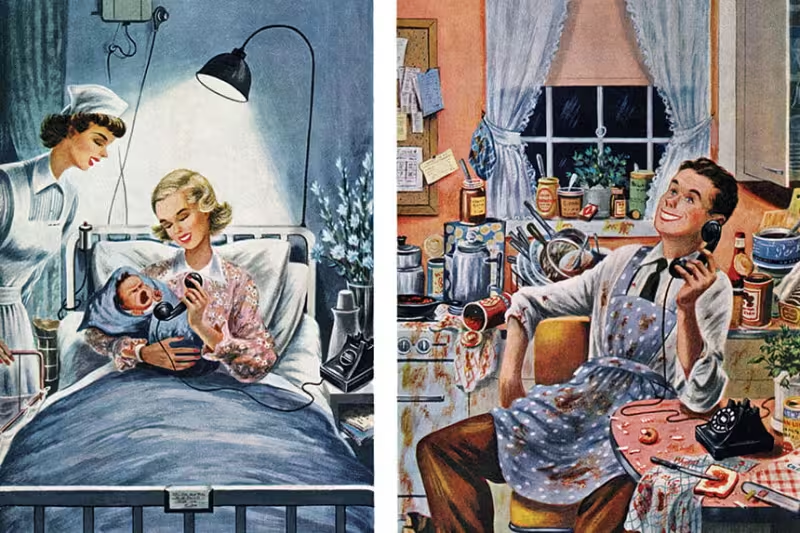
Two outlets ran strikingly different takes on Mother's Day 2026 this week: The Times of India published a feature titled "Mother's Day Wishes & Messages: Happy Mother's Day 2026: Top 65 Wishes, Messages, Images, and Quotes to Share with Your Mother," credited to the TOI Lifestyle Desk, while the Saturday Evening Post used a gallery in its May/June 2026 issue to trace the holiday's American origins to 1908 and note that Father's Day followed in 1910.
Anna Jarvis, the figure the Saturday Evening Post names as the founder of Mother's Day, sits at the center of the Post's timeline. The magazine places the holiday's official U.S. launch in 1908 and then records that Father's Day came along in 1910 at the behest of Sonora Smart Dodd — a two‑year gap the Post highlights as part of the story it tells in the May/June 2026 gallery "Thanks, Mom & Dad."
The weight of both pieces is literal: one is a serviceable, share‑ready package — Top 65 wishes, images and quotes — assembled by the TOI Lifestyle Desk, which describes itself as a team of dedicated journalists that curates lifestyle news for The Times of India readers. The other is a historical gallery that repositions the holiday as a modern U.S. invention while placing it alongside an older family of parental observances.
Context sharpens what that framing means for Mother's Day 2026. The Saturday Evening Post notes that versions of parental celebrations go back to the Middle Ages in some countries, but it says the U.S. interpretation reflects a more modern recognition, beginning in 1908. The Post also ties those late‑spring and early‑summer observances to a predictable uptick in commerce, observing that the timing historically boosts florists and tie merchants.


The tension between those two approaches is plain: The Times of India package treats Mother's Day 2026 as an occasion for direct personal expression — a curated list of messages and images meant to be copied, sent and posted — while the Saturday Evening Post frames the same holiday as the product of specific historical choices and a separate, later invention for fathers. One angle helps readers say the right thing today; the other seeks to explain how “today” became what it is.
That contrast matters now because both narratives will shape how people mark Mother's Day 2026. The Times of India feature gives readers tools for immediate participation — ready‑made messages and images — while the Post’s gallery reframes the holiday as part of a short, modern American timeline that began in 1908 and was followed by Father's Day in 1910, a detail that can change how the holiday is discussed in classrooms, social feeds and editorial pages this spring.
For anyone wondering which interpretation will stick, the evidence in these pieces points clearly in one direction: Mother's Day 2026 is being presented simultaneously as a moment for personal expression and as a modern invention with a specific origin story. That dual framing — shareable wishes on one side, a 1908 origin and a 1910 follow‑up on the other — will shape both how people talk about the day and, by timing, who benefits from its late‑spring surge in demand for flowers and ties.
If Mother's Day 2026 prompts argument, it will not be over whether to celebrate but over what the holiday means; the coverage from the TOI Lifestyle Desk and the Saturday Evening Post makes plain that this year's conversation will run from immediate, sentimental exchange to a short, traceable history that began with Jarvis and was followed by Dodd.