




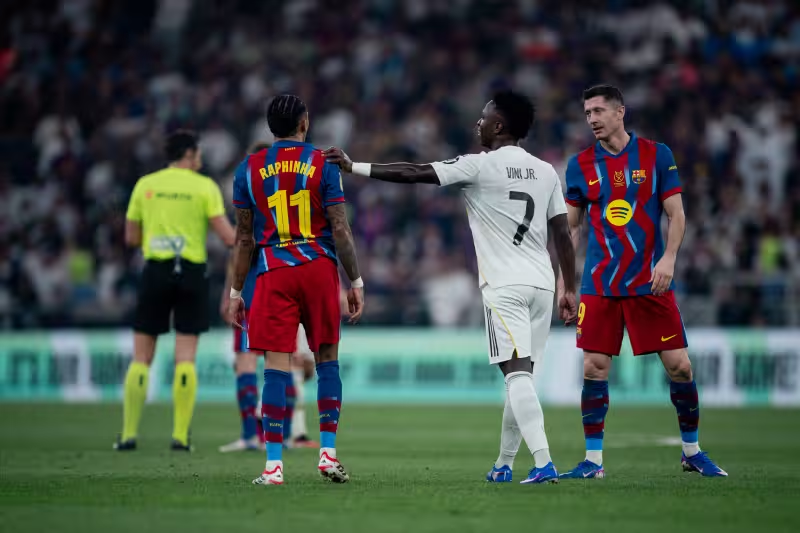
Barcelona and Real Madrid meet in El Clásico this weekend, and Barcelona coach Xavi has the task of picking a side that can handle Real Madrid’s pace and direct play; the game will be decided in midfield and on quick transitions. This is the single match that will shape the next headline about both clubs for days, and a clear prediction follows from how both teams line up and play.
The weight of the fixture is simple: El Clásico compresses an entire season into 90 minutes. The contest will turn on two things that every coach obsesses over — who controls the middle of the park and who wins the first decisive attacking moment. If Barcelona can keep possession high, force Real Madrid to defend in narrow spaces and finish their chances from set plays or quick combinations, they will edge the result. If Real Madrid can pin Barcelona back with direct runs and fast switches, they will make the game chaotic and favor counters that target defensive gaps.
Context matters because these teams prepare differently for this rivalry than for any other opponent. Neither side will treat the match as a routine fixture: preparation is intensified, rotation is limited and tactical discipline tightens. Both coaches have to balance the impulse to attack with the necessity of not conceding the first goal — a conceded early lead in this matchup rarely stays narrow. Fans and pundits will parse formations and one-on-one matchups before kickoff; those details will determine the winner more than generic form lines or league positions.



The tension sits in selection and temperament. Barcelona are happiest when they can play through the center; Real Madrid are happiest when they can exploit space behind fullbacks. That creates a contradiction: to dominate the ball, Barcelona must invite pressure in wider areas; to hit on the break, Real Madrid must cede some possession. Each side’s identity works against the other’s ideal scenario, so the manager who can impose a micro-plan on the game — an engineered pressing trigger or a carefully timed substitution — gains outsized influence. Individual mistakes, like poor passing under pressure or a misplaced defensive header, will have larger consequences than usual.
For the reader who wants the bottom line, the plausible, unvarnished call is Barcelona 2, Real Madrid 1. Barcelona’s ability to sustain pressure and turn possession into clear chances should be enough to create two decisive opportunities, while Real Madrid’s directness and set-piece threat make a single goal more likely than none. Expect the decisive moment to come in the second half: a midfield turnover leading to a quick counter or a set play that breaks a deadlock.
This prediction is not a certainty; it is the logical outcome of styles colliding. If Real Madrid can land an early blow and force Barcelona out of their rhythm, the score could swing the other way. Likewise, if Barcelona’s wide play is stifled and they cannot generate clear openings, the match will tilt toward a low-scoring draw or a narrow Real Madrid win. The single most consequential thing to watch at kickoff is which midfield pairing wins the first sustained sequence of possession — that sequence will tell you which team is likely to take control and, ultimately, who lifts the temporary bragging rights when the final whistle blows.