




Rejoice Akinde says she once planned to study electrical engineering, but the fresh Nursing graduate from the University of Ibadan ended up taking a very different route before joining 54 others for induction on Wednesday. She said the change began in SS3, when struggles with physics and further maths pushed her toward health and medical sciences instead.
Akinde said she got into the university with her first ever JAMB, then waited more than a year at home as COVID-19, an ASUU strike and another shutdown stretched the road to class. After first year came another eight-month strike, and she said that pause gave her the space to start working on The Sanity Initiative. “At some point, we had to be praying seriously against another strike. But all things work together for good because it was during the 8 months strike that I ideated and commenced groundwork planning the launch of The Sanity Initiative,” she said.
She also said the stretch away from lectures changed her thinking. “The ride was definitely a rollercoaster,” Akinde said, adding that she wrote a lot, prayed a lot and came to understand more about her life and future. In another post marking the end of her studies, she wrote that she had officially bagged her degree and said her life was a testament to God’s goodness.
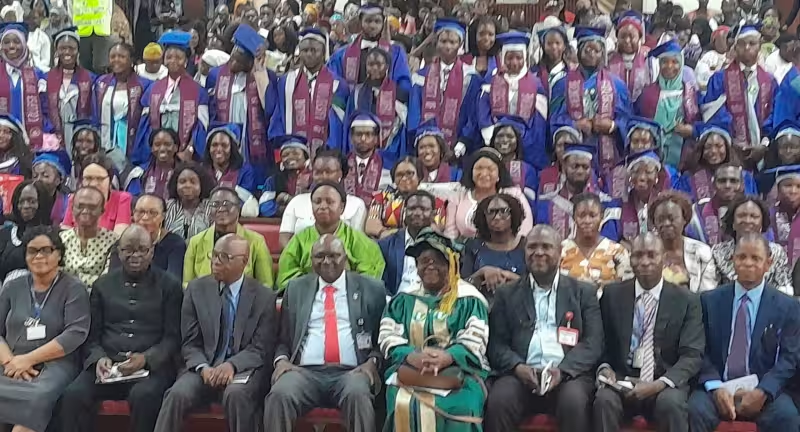
The induction ceremony for the Faculty of Nursing, College of Medicine, drew 55 graduates, including 13 who finished with First Class honours, according to a report on the event. It was held at the Paul Hendrickse Lecture Theatre and chaired by Vice Chancellor Prof. Kayode Adebowale, while the Registrar of the Nursing and Midwifery Council of Nigeria, Dr Ndagi Alhassan, was represented by Mrs Eleanor Nwake.
Adebowale told the inductees they were answering a higher calling and urged them to become lifelong learners and ambassadors of the university. He said the institution had produced competent nurses for the past six decades, while also pressing the new graduates to protect their well-being, a reminder that lands with force in a profession facing a global shortage of about 4.5 million nurses.
The ceremony closed a long, interrupted journey for Akinde and her classmates, but it also points to the work ahead: a health system still short of hands, and a new set of nurses stepping into it with their training finally complete.