




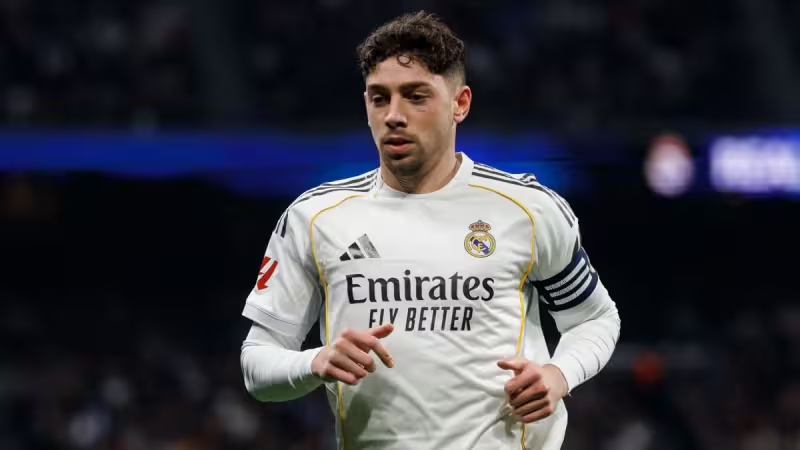
Real Madrid announced on May 12, 2026, that Fede Valverde was diagnosed with a traumatic brain injury after tests by the club's medical services, and that he is at home in good condition.
The club said Valverde will have to remain at rest for 10 to 14 days, following the medical protocols for that diagnosis. The statement made clear the diagnosis came from Real Madrid's own medical services and that the player had been examined the same day.
Club president Florentino Pérez addressed the matter at a press conference later on May 12, describing the incident as serious and adding that he was more upset that details had been made public than by the confrontation itself. Pérez said he has seen players argue during his 26 years as president but that such disputes normally stay inside the club, and he indicated the club knows who disclosed the episode to outsiders.
According to additional information released alongside Pérez's remarks, the reported altercation involved Valverde and teammate Aurelien Tchouaméni and the club imposed a combined fine on the two players of half a million euros. Pérez said the two men are friends and signaled the club expected them to reconcile quickly — he said they would even have coffee together the next day.



The facts in play are narrow and immediate: a confirmed medical diagnosis, a named recovery window and disciplinary action totaling €500,000. Those figures — the 10‑ to 14‑day rest period, the half‑million‑euro fine and Pérez's reference to 26 years of experience — are the weight of the story and explain why the club moved swiftly to make the diagnosis public and to answer questions about discipline.
Context is important here. The club's announcement focused on Valverde's health: the tests, the diagnosis and the prescribed rest. Only afterward did Pérez take questions and pivot to the breakdown in locker‑room privacy, saying the leak was worse than the scuffle itself and that the club had identified the person who spoke to the press. That sequence matters because it frames the medical bulletin as the immediate public priority and the internal fallout as the secondary, managerial issue.
The tension in Real Madrid's response sits between two competing impulses. On one hand, medical transparency — confirming a traumatic brain injury and a clear convalescence period — aims to protect the player and reassure supporters. On the other, Pérez's anger about the matter being aired publicly highlights the club's desire to control internal discipline. The fine and the public naming of the parties involved break with the idea that such rows simply stay "inside the house," creating a contradiction Pérez acknowledged at the podium.
What happens next is straightforward and consequential for the short term: Valverde will follow the prescribed rest and monitoring for at least 10 days, and the club will manage the disciplinary aftermath internally while facing scrutiny over how the leak occurred. Pérez's comments — that he believed the players would make up quickly and that the divulgence of the incident was the greater offense — indicate the club intends to restore relations within the squad even as it addresses the breach of confidentiality.
For now the clearest image is of Valverde at home, recovering under the club's instructions; the broader question left by Pérez's remarks is whether Real Madrid can both enforce sanctions publicly and keep player disputes from splintering into repeated leaks. The club's immediate priority, however, is medical: Valverde must rest and be monitored for the 10 to 14 days the doctors have ordered.