



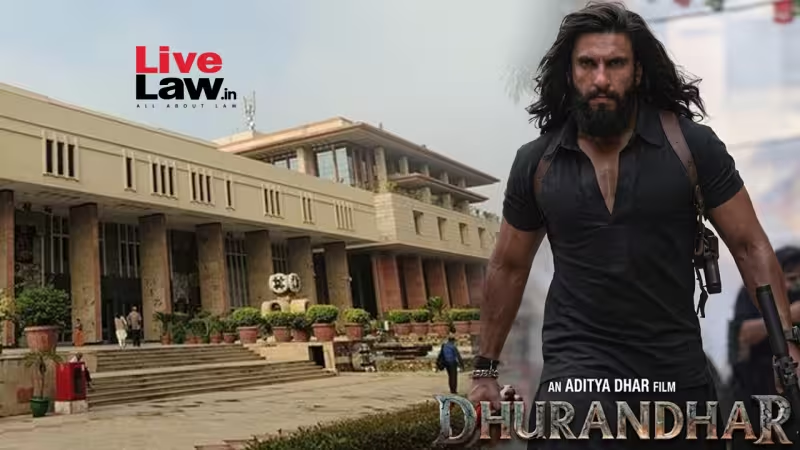
The Delhi High Court on Thursday refused to grant interim relief to Trimurti Films Private Limited in a copyright dispute over the song “Tirchi Topiwale.”
Justice Tushar Rao Gedela, who heard the matter, told the court that "if Trimurti Films is able to establish its rights as asserted, adequate compensation" could be provided rather than ordering an immediate injunction, a position that left the film’s wider release unblocked for now.
Trimurti Films had filed a suit alleging the iconic track from the film Tridev was used without authorization in the movie Dhurandhar: The Revenge. The company's request for interim protection—measures to halt distribution or further exploitation pending a full hearing—was denied on Thursday by the bench.
The case landed amid renewed attention to the Dhurandhar franchise after a media headline described Dhurandhar 2 as containing extra material cut from the theatrical version. The Times of India Entertainment Desk called them "Beheadings, severed head football - all EXTRA scenes that were cut from theatrical version," a sensational description that has helped keep the title in the headlines as the legal dispute proceeds.


The weight of the court’s reasoning rests on a practical choice: whether to freeze a commercial product before a full trial, or to allow commerce to continue while leaving remedy in the form of monetary compensation if the claimant prevails. Justice Gedela’s comment — that compensation could be adequate — signaled the court’s inclination to preserve the status quo for distributors and audiences pending a final adjudication.
That posture creates a tension at the center of the litigation. Trimurti Films argues the song’s unauthorized use strikes at core copyright protections and sought immediate court intervention. The court, however, stopped short of converting that argument into an immediate order against the film, instead pointing to post-trial remedies. The decision illustrates the gap between the damage a rights holder fears and the judicial preference, in some cases, for financial redress rather than preliminary injunction.
For Trimurti Films, the ruling means the company must now press its claim through the regular litigation process to prove ownership and quantify any loss. For the makers and distributors of Dhurandhar: The Revenge, the ruling permits continued distribution while the central question of whether the song was used without permission is litigated.
What happens next is straightforward: the lawsuit continues toward a full hearing where Trimurti Films will have to establish the rights it asserts; if the court accepts those rights, it has already signaled that "adequate compensation" is an available and likely remedy. In short, the Delhi High Court declined to stop the film in its tracks and instead left the parties to sort damages in court — a resolution that preserves commerce now and leaves legal accountability to be decided later.