




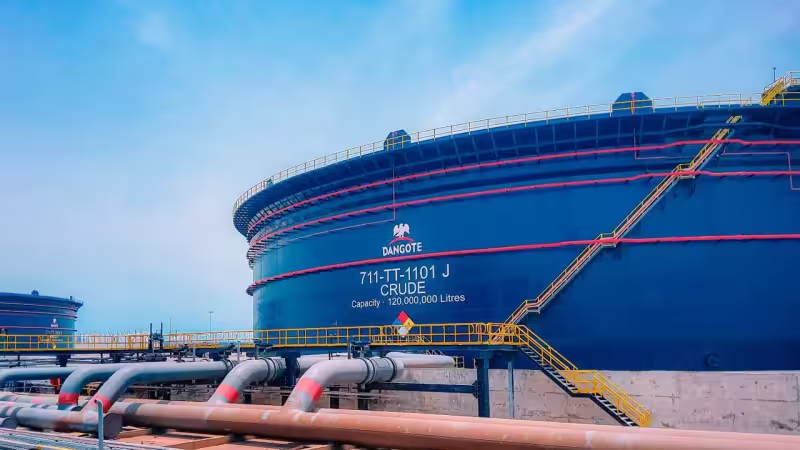
Dangote Petroleum Refinery on Friday asked the Federal High Court in Lagos to set aside import permits issued or renewed in May to six petroleum marketers and to the Nigerian National Petroleum Company Limited, NNPCL, dragging the Nigerian government back into court over fresh licences.
In its filing, the refinery — built as a 650,000-barrel-per-day plant — told the court that the permits issued in May "undermine its operations and contravene the law." The company argues the statute allows imports only when domestic supply falls short, and it wants the licences revoked.
The case puts numbers on what would otherwise be abstract policy: six marketers were granted permits in May, and NMDPRA reported that Dangote Refinery supplied 79 percent of the country’s petrol consumption in April 2026. The refinery previously ended a related lawsuit in 2025 after intervention by the Federal Government; this new action revives the dispute weeks after regulators moved to renew or issue import authorizations.
Daily Post Nigeria has reported market prices that underscore the commercial stakes: petrol sold by importers is offered around N1,285 and N1,295 per liter, while Dangote Refinery dispenses petrol at N1,200 per liter.



Context matters and it comes after the weight of the filing. The dispute centers on whether the government should allow fresh fuel imports when a major domestic refinery says it can supply the market. Stakeholders opposed the fresh licences on the ground that the refinery’s output should reduce or eliminate the need for imports — a point the refinery is pressing in court.
The friction in the story is sharp: the law cited by the refinery permits imports only when domestic supply is insufficient, yet regulators issued new licences in May while, by their own account, Dangote supplied nearly four of every five litres consumed in April 2026. The government and its agencies granted authorizations that the refinery says cut across statutory limits and its commercial interest; regulators proceeded despite the refinery having halted a previous suit the government helped mediate in 2025.
What happens next is straightforward and consequential: the Federal High Court in Lagos must decide whether those May permits stand. If the court sets them aside, regulators and importers would face immediate legal and commercial consequences; if the court leaves them intact, the decision will affirm regulatory discretion to permit imports even when a large domestic plant is supplying most demand.
The single most consequential unanswered question is whether a judge will rule that the law forbids fresh import licences when domestic refining — here, a 650,000-barrel-per-day facility supplying 79 percent of April 2026 demand — is available, a ruling that would reshape who can sell petrol in the market and at what price.