



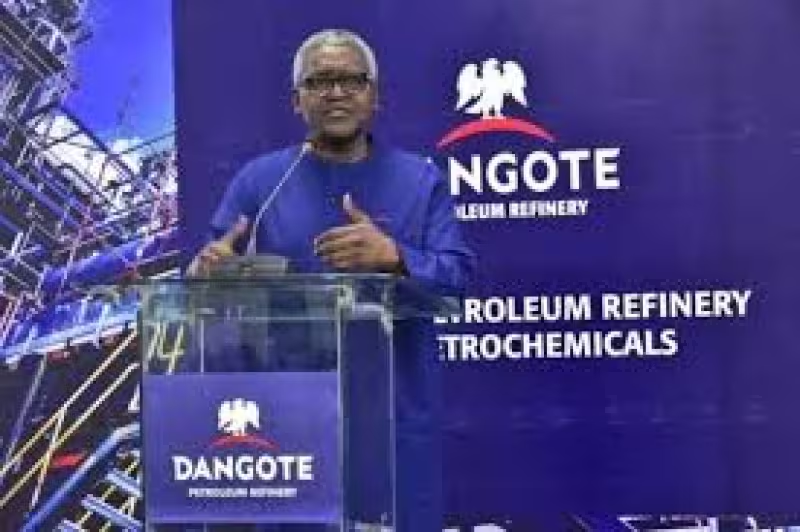
Aliko Dangote said Wednesday that the Dangote Group turned down requests from NNPC Limited to increase the national oil company’s stake in the Dangote Petroleum Refinery, because the company wants to give more Nigerians a chance to own shares in the plant.
The refusal comes as the group prepares an initial public offering for the refinery that Dangote described as a way to “spread it and have everybody be part of it.” The move is notable because NNPC in 2021 paid $1bn to acquire a 7.25 per cent stake and held an option to buy the remaining 12.75 per cent by June 2024.
Dangote told interviewer Nicolai Tangen that NNPC had attempted to acquire additional shares, but the group declined. He said the company had originally signed an agreement that contemplated a 20 per cent stake for the national oil company, but that NNPC did not pay the balance of the money and later confirmed it would remain at the amount already paid — which Dangote said was about 7.2 per cent, not 20 per cent.
Those percentages matter because they determine who will control returns from a refinery Dangote says is now producing 661,000 barrels per day, above its 650,000-barrel daily target. The refinery, built with support from a mix of local and international lenders because of naira devaluation, was funded in part by Afreximbank, the Africa Finance Corporation, Zenith Bank, Access Bank, UBA, Standard Bank of South Africa and Standard Chartered Bank.
Regulatory moves this week have sharpened the stakes. PenCom has granted a one-off dispensation that relaxes Section 6.2.7.1 (iii) of its pension investment rules so pension fund administrators can take part in the refinery IPO. PenCom said the relaxation waives the usual existence, profitability and dividend requirements for the offering and that the approval is exceptional, case-specific and not an automatic precedent for future IPOs.
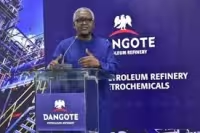

The weight of the two developments — Dangote’s refusal and PenCom’s waiver — is practical. If pension funds are allowed to participate, they could become major domestic investors in the listing, directing long-term local capital into what Dangote has framed as a nationally owned asset spread more widely than the national oil company alone.
But the exchange between Dangote and NNPC introduces friction. Dangote said the NNPC reduced its planned stake from 20 per cent to roughly 7.25 per cent under former Group Chief Executive Mele Kyari. A former NNPC spokesman, Olufemi Soneye, has said the reduction in planned ownership was tied to NNPC reallocating funds to compressed natural gas stations. The differing explanations expose a gap between the corporate account and the national oil company’s rationale.
Dangote also named the refinery’s chief external risks: civil war and inconsistent government policy. He said those policy inconsistencies remain a concern and that his team is addressing them, while stressing that the national oil company already owns a minority share and had sought to increase that holding.
The refinery’s scale and financing complicate the politics. Built to process hundreds of thousands of barrels daily, the plant represents a rare, large-scale private industrial investment in the country and was financed in part because lenders could not rely on the naira. Dangote has framed the IPO as a corrective: by opening ownership, the company hopes to dilute any single institution’s influence while broadening national participation.
That strategy now faces a precise test. PenCom’s exceptional dispensation creates a legal path for pension money to flow into the offering, but the regulator made clear the decision does not set a general rule. Whether pension funds will allocate meaningful capital, and whether individual Nigerian investors will be able to subscribe in sufficient numbers, will shape who actually owns the refinery once the IPO proceeds.
For now, the immediate result is clear: Dangote has kept the refinery’s ownership plan tightly in his company’s control and signalled that the listing will prioritise broad, domestic participation over a deeper stake for the national oil company. The most consequential unanswered question is whether that domestic demand — from pension funds and retail investors — will materialize at the scale needed to lock in the ownership model Dangote is proposing.