



Vicente de la O Levy said Cuba has completely run out of diesel and fuel oil and that the country’s energy system is now in a critical state, as hundreds of people took to Havana’s streets on Wednesday to protest the power cuts.
De la O Levy told reporters that crude, fuel oil and diesel supplies were effectively exhausted and that the only remaining supply was natural gas from domestic wells, where production has grown. Parts of Havana have been plunged into 20 to 22-hour blackout periods, he said, leaving hospitals unable to function normally, forcing schools and government offices to close and hitting the island’s tourism sector.
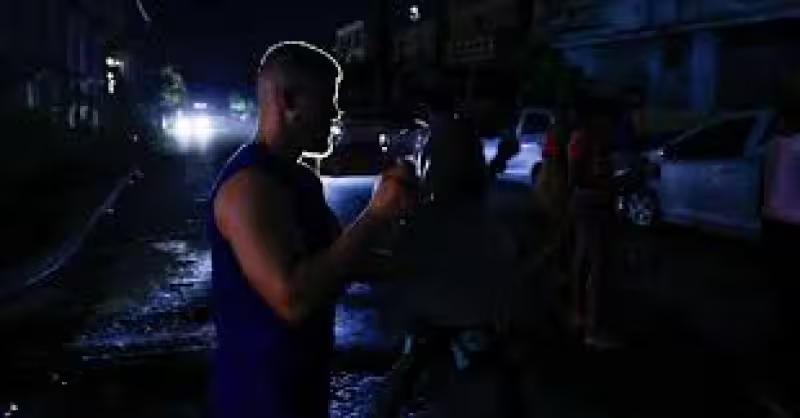
The unrest turned visible on Wednesday evening when hundreds of Cubans across Havana blocked roads with burning rubbish and shouted anti-government slogans. The demonstrations — the largest single night of unrest since the energy crisis began in January — included residents of the San Miguel del Padron neighbourhood who shouted, 'turn on the lights!'
Authorities face immediate strain: emergency wards without reliable power and a public services network reduced to minimal operation. De la O Levy warned that the shortages left the country with no diesel and no fuel oil, repeating that those fuels were absent and that only gas from wells remained to keep some systems running.
The shortages trace to cuts in shipments from countries that normally supply oil to Cuba’s refinery system. Cuba typically relies on Venezuela and Mexico for that supply, and both have largely curtailed deliveries after a U.S. threat of tariffs against nations sending fuel to the island. President Miguel Diaz-Canel blamed the United States on Wednesday, saying the dramatic worsening had a single cause: what he called a genocidal energy blockade by the U.S.

The U.S. State Department on Wednesday repeated an offer of $100m in humanitarian assistance, saying any aid would be distributed in coordination with the Catholic Church and reliable humanitarian organisations. The offer underscores a stark contrast between Washington’s public readiness to provide relief and Havana’s insistence that the crisis stems from an external blockade.
For ordinary Cubans the calculations are immediate and practical. Hospitals without steady power cannot maintain normal services. Schools and government offices have closed. Tour operators report cancellations and strained visitor services. The sequence of rolling blackouts has pushed more people into the streets after months of mounting frustration and shorter, scattered protests earlier this year.
The most combustible element is the gap between blame and relief: Havana says the crisis is driven by a U.S.-led choke on fuel; Washington points to the need for meaningful reforms while offering humanitarian aid. The disruption in supplies from Venezuela and Mexico, the very partners Havana depends on, followed a U.S. threat of tariffs that chilled those deliveries — a geopolitical pressure that has translated into dead generators and empty hospital tanks.
Security forces responded to the scenes in Havana as fires and roadblocks made movement difficult; officials have not published comprehensive casualty or arrest figures. The protests on Wednesday were the most sustained and widespread since the energy shortfalls began in January, and they concentrated in working-class districts where outages have been longest.
De la O Levy’s stark inventory — no crude, no fuel oil, no diesel, only increased well gas — framed the day’s urgency. Unless significant fuel supplies are restored, or a new arrangement for imports or sustained external assistance is reached, the island’s hospitals, schools and tourism industry will remain paralysed and protests are likely to continue.