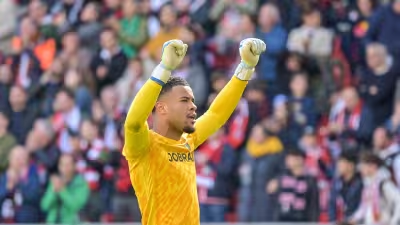





Chelsea lost the FA Cup final 1-0 to Manchester City last weekend, a defeat the club's players described as narrow and painful.
Malo Gusto, speaking in the hours after the game, said the result was hard to take and stressed the team matched their opponents in most departments: "I think we matched them in every point in the game. We showed a lot of energy and I think the plan was good. It was just a matter of not having that bit of luck."
The scoreline and the immediate fallout carry weight because Chelsea believe they were close to turning the final. Gusto insisted the group created several promising opportunities, had three penalty appeals turned down and left Wembley convinced they had done enough in large stretches of the match. "We’re disappointed. We wanted to win this game, but it didn’t happen. So it’s a tough feeling for us, for the fans, and for the club. To lose 1-0 this way is tough to accept, but we have to move forward now and stay together," he added.
That forward motion is urgent: Chelsea have two Premier League matches left after the final, and the team returns to Stamford Bridge on Tuesday night for what the club called the final home game of the campaign against Tottenham Hotspur. The remaining fixtures give the squad immediate targets to salvage a season now defined, to many, by yesterday's narrow defeat.



Context mattered in another way: the squad has already faced disruption this year. During pre-season, Levi Colwill suffered an ACL injury and missed most of the campaign; after that spell on the sidelines Colwill returned to the first-team picture, a recovery that has shaped both squad selection and expectations across the season.
Calum McFarlane, assessing the final, described it as an even contest with little between the sides, saying Jorrel Hato should have had a penalty in the box and that Chelsea "went toe-to-toe with one of the best teams in the world." Those assessments underline the paradox at the heart of Chelsea’s mood: performance and result do not line up. Team leaders and pundits point to the on-field progress — chances created, tactical plans executed — while the scoreboard shows a single-goal defeat.
The tension is not abstract. Three turned-down penalty appeals and a string of promising moments sharpen the sense of injustice; they also force a practical question for the coaching staff and players: how to convert fine performances into decisive outcomes. If Chelsea truly matched Manchester City in "every point," as Gusto said, then the remedy is not overhaul but a focus on the small margins that decide finals and tight league contests.
For supporters the image of the evening will be the gap between what was done and what was gained. Names that represent the club’s strength — reece james among them in conversations around the ground — are being invoked as Chelsea prepare for those last two Premier League fixtures. The immediate task is concrete: regroup in training, address the issues that left three penalty appeals unawarded, and treat Tuesday's final home match as both a chance for points and a barometer of whether the team can turn narrow pain into late-season momentum.
Gusto framed the immediate outlook without surrender: "The season is not finished – there are two games left. We are disappointed tonight, but we have to move forward now. We have two games left in the Premier League and we have to fight again." That resolve will be tested within days at Stamford Bridge, where the club can choose to let a 1-0 defeat define the end of the campaign or use the remaining fixtures to answer the question the final left hanging: can Chelsea turn near parity into results?