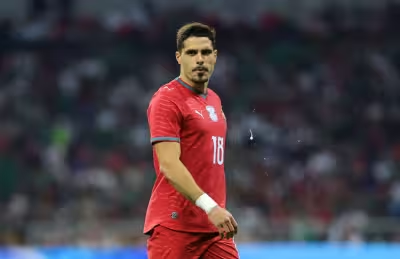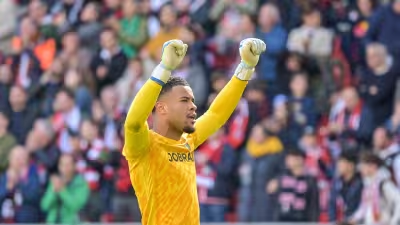

Leandro Trossard has been confirmed on Belgium’s list of call‑ups for the 2026 World Cup, making him the third Arsenal player to receive a national-team nod for the tournament.
The confirmation arrives after a busy week for the club’s internationals: Sweden has involved Viktor Gyokeres in its plans, France called up William Saliba, and Brazil included Gabriel Magalhaes, Gabriel Martinelli and Gabriel Jesus in Carlo Ancelotti’s 55‑man preliminary squad. That Brazil list — and several others — will be thinned to 26 names on Monday, May 18.
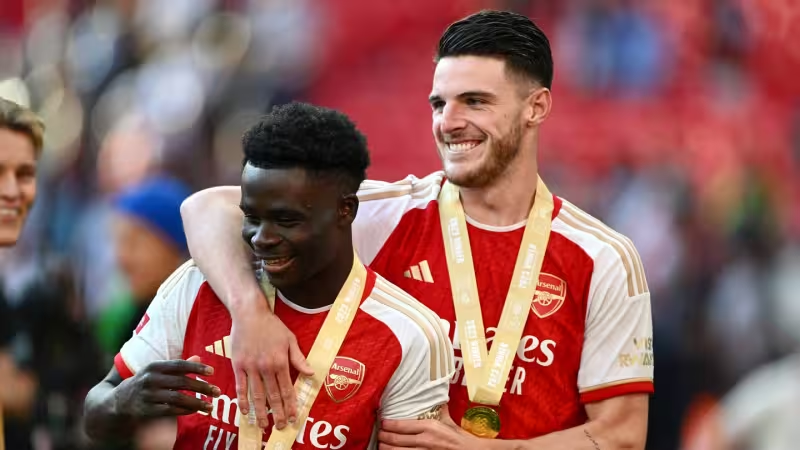
The numbers underline why the moment matters: three Arsenal players now have direct ties to World Cup selections, and several more are widely expected to be involved. England’s Group L will feature Croatia, Ghana and Panama, and Arsenal players expected in England’s squad include Bukayo Saka, Declan Rice, Noni Madueke, Eberechi Eze and Myles Lewis‑Skelly. William Saliba is described as locked in to anchor the French defense; Gabriel Magalhaes and Gabriel Martinelli are described as holding down spots in Brazil’s broad squad.


Timing is tight. FIFA expects final squads to be announced by June, and national associations are moving from early lists to the hard decisions that will determine who travels to the tournament hosted across Canada, Mexico and the United States. Portugal, Norway, Germany and England are set to name their squads next week; Spain and the Netherlands will follow the week after. Ecuador’s exact announcement date remains unknown.
The friction now is obvious: preliminary selections give the appearance of security but do not guarantee a place on the plane. Brazil’s 55‑man list is a case in point — including three players affiliated with Arsenal — but the cut to 26 on May 18 will force coaches to pick between incumbency, form and tactical fit. Across Europe, managers face similar pressure: Martin Odegaard is expected to play for Norway after the country ended a 25‑year tournament drought, Kai Havertz is expected to lead the line for Germany, and Piero Hincapie is expected to play for Ecuador, yet none of those expectations remove the risk posed by final cuts and last‑minute fitness questions.
For Arsenal the immediate picture is mixed but clear: the club already has a visible footprint at the tournament. Trossard’s inclusion for Belgium is the latest confirmation, Saliba’s role with France is described as foundational, and a cluster of Arsenal names is likely to appear in England’s midfield and attack. Fans tracking arsenal players 2026 world cup prospects can point to multiple hand‑raised selections; what remains uncertain is how many of those hands will pass through the May 18 filter and the weeks of final selections that follow.
At the end of the week the story resolves into a simple test: will Arsenal’s domestic form translate into final international rosters? The May 18 reductions and the flurry of squad announcements due next week will show whether the club’s crop of internationals travel to a 48‑nation tournament billed as the largest in history — and whether the club’s influence at international level grows or merely registers as noise on the way to June.