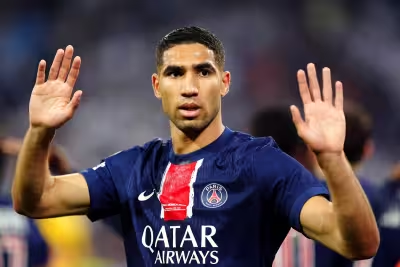


Ángel Di María told A Bola before the World Cup that Lionel Messi is better than Cristiano Ronaldo, saying flatly: "For me, Leo is better than Cristiano because he has a natural talent. He doesn't need to constantly strive to equal or surpass someone."
That remark is the reason queries for di maria on messi ronaldo are climbing today: Di María is one of the few players who has shared long spells with both men — he played 166 times alongside Cristiano Ronaldo at Real Madrid and featured in 141 games with Lionel Messi for Argentina and Paris Saint-Germain — and his view lands as squads are finalizing their World Cup attention.
The numbers behind his opinion sharpen its weight. Di María and Ronaldo combined for 28 goal participations across 166 matches at Real Madrid; Di María and Messi combined for 16 goals in their 141 games together. Those figures underline different patterns of collaboration but do not, in Di María's account, change his judgment about who is the more naturally gifted player.

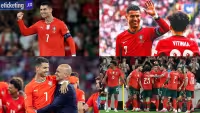
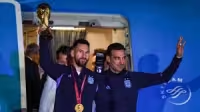
Di María's exact phrasing pushed the point beyond routine praise: he framed Messi's edge as innate, saying Messi "has a natural talent" and does not need to "constantly strive to equal or surpass someone." That matters because it is a first-hand comparison from a teammate who lived the training ground and matchday routines beside both stars — experience that few can claim with such scale.
There is an immediate friction in the claim. Di María spent a longer run in club football with Ronaldo at Real Madrid and left Spain for Manchester United in 2014, later moving on to Juventus, returning to Benfica for a second stint and then back to Rosario Central. He also later played alongside Messi at PSG. Naming Messi superior after more matches with Ronaldo runs against what casual readers might expect from someone whose club career overlapped so extensively with Cristiano at Madrid — and Di María offered no explanation in the interview for why he chose this moment to settle the comparison.
Those gaps matter. The Messi–Ronaldo debate is long-running; Di María's verdict rewrites part of the ledger by privileging perceived natural talent over other measures like longevity, trophy lists or club-level dominance. His comments add a fresh, simple metric — the eye of a teammate — but leave unanswered which criteria should carry the most weight in public arguments and expert rankings.
What happens next is not scripted. Di María did not attach a follow-up or concrete example to his declaration, and there is no immediate sign he will expand on the point. The most consequential unanswered question after his interview is why he raised the comparison now and whether his timing — just before the World Cup — was meant to nudge the debate or simply reflect a personal conviction he has long held.